
Is That Really a Brown Recluse or Just a Harmless Lookalike
Finding a brown spider in your Texas home does not automatically mean you have found a brown recluse. Wolf spiders, grass spiders, spitting spiders, and several other common species can look similar at a glance.
Color is one of the least reliable ways to identify a spider. A real brown recluse has a specific combination of physical features, including six eyes arranged in three pairs, a plain abdomen, unbanded legs, and usually a dark violin-shaped marking.
Its behavior and hiding place can also provide useful clues. When the identification remains uncertain, avoid handling the spider and let a pest professional examine it.
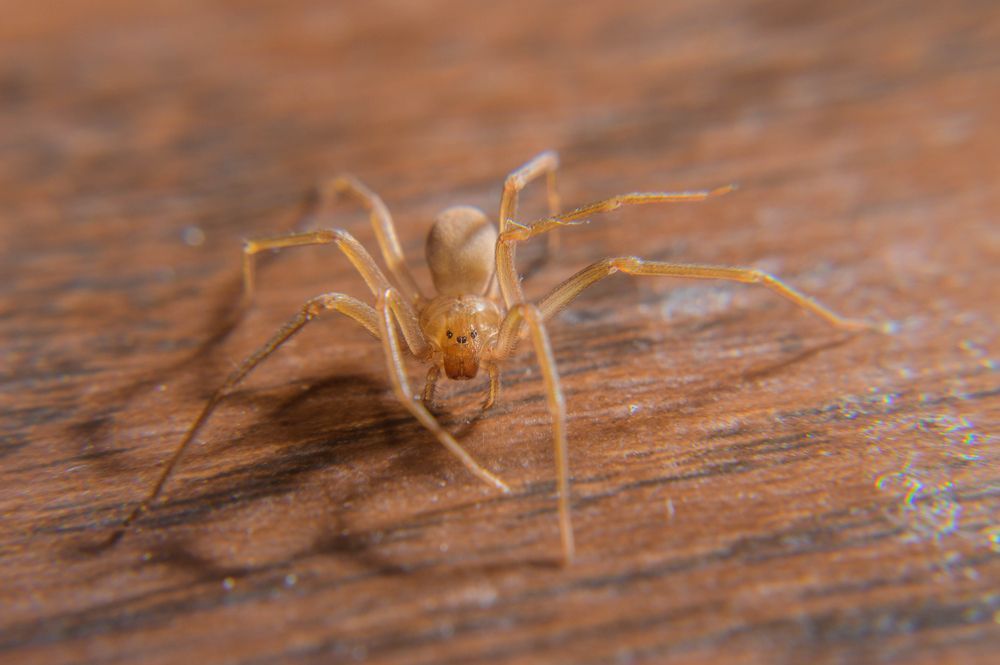
What Does a Brown Recluse Look Like?
A brown recluse is usually light tan to dark brown. Its abdomen tends to be plain rather than striped, spotted, or heavily patterned. The legs are slender, evenly colored, and do not have the obvious spines or dark bands seen on many harmless spiders.
Adults often have a darker violin-shaped marking on the upper body. The wider portion sits near the eyes, while the narrow “neck” points toward the abdomen. This marking may be difficult to see on a small spider, and poor lighting can make ordinary shadows look like a violin.
The most dependable physical characteristics include:
- Six eyes arranged in three pairs
- A plain, oval abdomen
- Slender legs without obvious spines
- No dark bands around the legs
- A generally uniform tan or brown color
- A dark violin-shaped marking on many adults
The Texas A&M AgriLife guide to common Texas spiders explains that the eye arrangement helps separate recluse spiders from most other species. It also notes that brown recluses generally lack leg spines and use silk mainly for retreats and egg protection rather than to catch prey.
Why the Violin Mark Is Not Enough
The violin marking receives a lot of attention, but it is easy to misread. Several spiders have dark lines, patches, or shadows on the upper body that can resemble a fiddle when viewed from the wrong angle.
The marking may also be faint on a real brown recluse. Juveniles can be especially difficult to identify without magnification and experience.
Before deciding that a spider is a brown recluse, look for the complete combination of features. A spider with a possible violin mark but striped legs, a patterned abdomen, large spines, or thick hair is probably another species.
Do not place your face or hands close to a spider to count its eyes. Take a clear photograph using your phone’s zoom or leave the identification to a trained technician.
Brown Recluse vs. Wolf Spider
Wolf spiders are among the most frequently mistaken brown recluse lookalikes in Texas. Both may be brown and may run across floors while hunting insects, but their bodies are quite different.
Wolf spiders are usually stockier and hairier. Many have dark stripes or mottled patterns along the body and legs. They also have two noticeably large eyes positioned above a row of smaller eyes.
A brown recluse typically looks smoother and more delicate. Its coloring is more uniform, and it does not have the same large forward-facing eyes.
Behavior can also help. Wolf spiders often run into the open and may appear in garages, patios, and lower-level rooms. Brown recluses are more likely to remain inside dry, narrow hiding places until disturbed.
Brown Recluse vs. Grass Spider
Grass spiders commonly live around lawns, landscaping, foundations, and low vegetation. Their brown coloring and stripes sometimes lead homeowners to mistake them for recluses.
A grass spider usually has a patterned body and visible spinnerets projecting from the rear of its abdomen. These spinnerets can look like two short tails. Brown recluses do not have the same prominent projections.
The web provides another strong clue. Grass spiders construct flat sheet webs with a funnel-shaped retreat. Brown recluses may create loose silk in a hiding place, but they do not build funnel webs to capture prey.
A spider sitting inside a noticeable funnel web near the foundation is far more likely to be a grass spider than a brown recluse.
Brown Recluse vs. Spitting Spider
Spitting spiders are less familiar to many homeowners, but they can create confusion because they also have six eyes arranged in three pairs.
Look at the body shape and markings. Spitting spiders often have spotted upper bodies and long legs with visible bands. Their upper body also appears rounded or dome-shaped rather than relatively flat.
Brown recluses usually lack those spots and leg bands. Their overall appearance is plainer.
Spitting spiders move slowly and use a mixture of silk and sticky material to immobilize small prey. They are considered harmless to people and are common indoor spiders in parts of Texas.
Brown Recluse vs. Cellar Spider
Cellar spiders are the delicate, long-legged spiders often found in garages, closets, utility rooms, and ceiling corners. They build loose, messy webs and may shake rapidly when disturbed.
Their legs are much longer and thinner in proportion to the body than those of a brown recluse. Cellar spiders also spend most of their time hanging in a web, while brown recluses usually stay hidden in cracks or move across surfaces while hunting.
Seeing a spider in a tangled web near the ceiling is a strong sign that it is not a brown recluse.
Brown Recluse vs. Harvestman
Harvestmen are commonly called daddy longlegs, although they are not true spiders. Their bodies appear as one rounded section rather than the two distinct sections seen in spiders.
Most have extremely long legs and a small oval body. They do not produce silk and do not have venom glands.
A brown recluse has a clearly separated upper body and abdomen. Its legs are long but not nearly as exaggerated as those of most harvestmen.
Where Brown Recluse Spiders Hide
The word “recluse” describes the spider well. These spiders prefer dry, protected spaces where they are unlikely to be disturbed.
Outdoors, possible hiding places include:
- Beneath rocks
- Inside stacked firewood
- Under loose bark
- Around lumber stored on the ground
- Inside sheds and other outbuildings
Indoors, they may hide in:
- Attics and crawl spaces
- Wall voids
- Closets
- Cardboard boxes
- Stored clothing
- Shoes and work gloves
- Areas behind furniture
- Garages and storage rooms
A spider running across an open wall in bright daylight may be another species, although behavior alone cannot confirm identification. Brown recluses are mainly active at night and tend to return to quiet cracks or retreats during the day.
Does Finding One Mean You Have an Infestation?
One suspected brown recluse does not prove that a large population is living in the home. The spider could have entered with firewood, a storage box, outdoor equipment, or another item.
Repeated sightings deserve closer attention. Finding several spiders, shed skins, egg cases, or specimens on monitoring traps may indicate established activity.
The location also matters. Multiple similar spiders found in closets, attics, stored boxes, or other undisturbed areas are more concerning than one spider near an open exterior door.
Because harmless species are frequently misidentified, confirmation should come before treatment. A clear photograph or intact specimen can help a pest professional determine which spider is present.
Are Brown Recluse Spiders Aggressive?
Brown recluses are not known for chasing or attacking people. They usually attempt to remain hidden or move away from a disturbance.
Most bites occur when a spider becomes trapped against the skin. This can happen when someone puts on a shoe, glove, or piece of clothing containing a hidden spider. Accidental contact can also occur while moving boxes, cleaning a garage, handling firewood, or reaching into a dark storage area.
You can reduce the chance of contact by:
- Shaking out stored shoes and clothing
- Wearing gloves while moving boxes or firewood
- Avoiding bare-handed searches inside dark spaces
- Keeping beds slightly away from walls
- Preventing bedding from touching the floor
- Inspecting seasonal items before bringing them indoors
These steps are especially useful in areas that remain quiet for long periods.
Can You Identify a Brown Recluse Bite?
A skin reaction alone cannot confirm a brown recluse bite. Many insect bites, bacterial infections, allergic reactions, and other medical conditions can produce redness, swelling, tenderness, or damaged skin.
A bite may not be painful immediately. Symptoms can develop over the following hours or days, and reactions vary from person to person. Although some bites can damage surrounding tissue, severe illness is uncommon.
The medical guidance from Poison Control on suspected brown recluse bites recommends cleaning the area with soap and water and contacting a poison center for individualized advice. It also emphasizes that an accurate diagnosis is difficult unless the spider was seen and correctly identified.
Seek prompt medical help if a suspected bite causes:
- Increasing or severe pain
- Rapidly spreading redness
- A blister or darkening skin
- Fever, chills, nausea, or weakness
- Drainage or other signs of infection
- Trouble breathing or facial swelling
Do not cut the area, attempt to remove venom, or rely on a photograph of the skin for identification. A healthcare professional should evaluate worsening symptoms.
What to Do With a Suspected Brown Recluse
Do not pick up the spider with your hands. Keep children and pets away from the area until it has been removed.
When it can be done safely, take a close photograph without touching the spider. You may also trap it beneath a clear container and slide stiff paper underneath. Only attempt this when you can keep your hands well away from the spider.
A vacuum can remove spiders, webs, and egg cases from accessible areas. Empty the vacuum contents into a sealed bag and dispose of it outside.
Avoid spraying large amounts of pesticide around the room without knowing where the spiders are hiding. Brown recluses spend much of their time inside cracks, storage materials, and other protected areas that surface spraying may not reach.
How to Make Your Home Less Attractive to Recluse Spiders
Long-term control involves removing hiding places, blocking entry points, and reducing the insects spiders eat.
Organize Storage Areas
Replace open cardboard boxes with plastic containers that have secure lids. Keep belongings off the floor and leave space between storage items and walls for inspection.
Regularly clean quiet areas such as closets, garages, attics, and utility rooms. Wear gloves and long sleeves when moving items that have been undisturbed.
Seal Exterior Openings
Repair worn weatherstripping around doors and windows. Seal gaps around utility lines, vents, pipes, foundation joints, and other exterior openings.
Check the bottom and sides of garage doors carefully. Even a narrow gap can allow spiders and insect prey to enter.
Move Outdoor Materials
Store firewood away from the house and keep it raised off the ground when possible. Avoid stacking lumber, stones, or unused materials directly against exterior walls.
Trim vegetation that touches the structure and remove heavy leaf litter close to the foundation.
Reduce Other Insects
Spiders stay where food is available. Cockroaches, crickets, beetles, flies, and other insects can support ongoing spider activity.
Fix moisture problems, store food securely, clean spills, and reduce outdoor lighting near doors when it is not needed. Our guide to keeping spiders out of the house covers additional exclusion and prevention steps.
When to Call for Professional Identification
Professional help makes sense when you repeatedly find brown spiders, cannot identify the species, or suspect activity in places that are difficult to inspect safely.
At EcoForce Pest Management, we look beyond the spider’s color. Our inspection considers the spider’s physical features, hiding areas, entry points, webs, monitoring evidence, and the insect activity that may be supporting it.
Our Texas spider-control service uses an integrated pest management approach that may include inspection, identification, targeted treatments, web removal, and recommendations for reducing future activity.
Get a Clear Answer About the Spiders in Your Home
Many brown spiders found in Texas homes are harmless lookalikes. Still, a suspected brown recluse should not be handled or dismissed based on a quick glance.
When spiders continue appearing or you need help identifying a specimen, contact EcoForce Pest Management for an inspection. We can determine what is present, locate the areas supporting the activity, and recommend the right next step for your property.
Start Being Pest Free Today!
Contact Us