What Attracts Ants to Your Home?
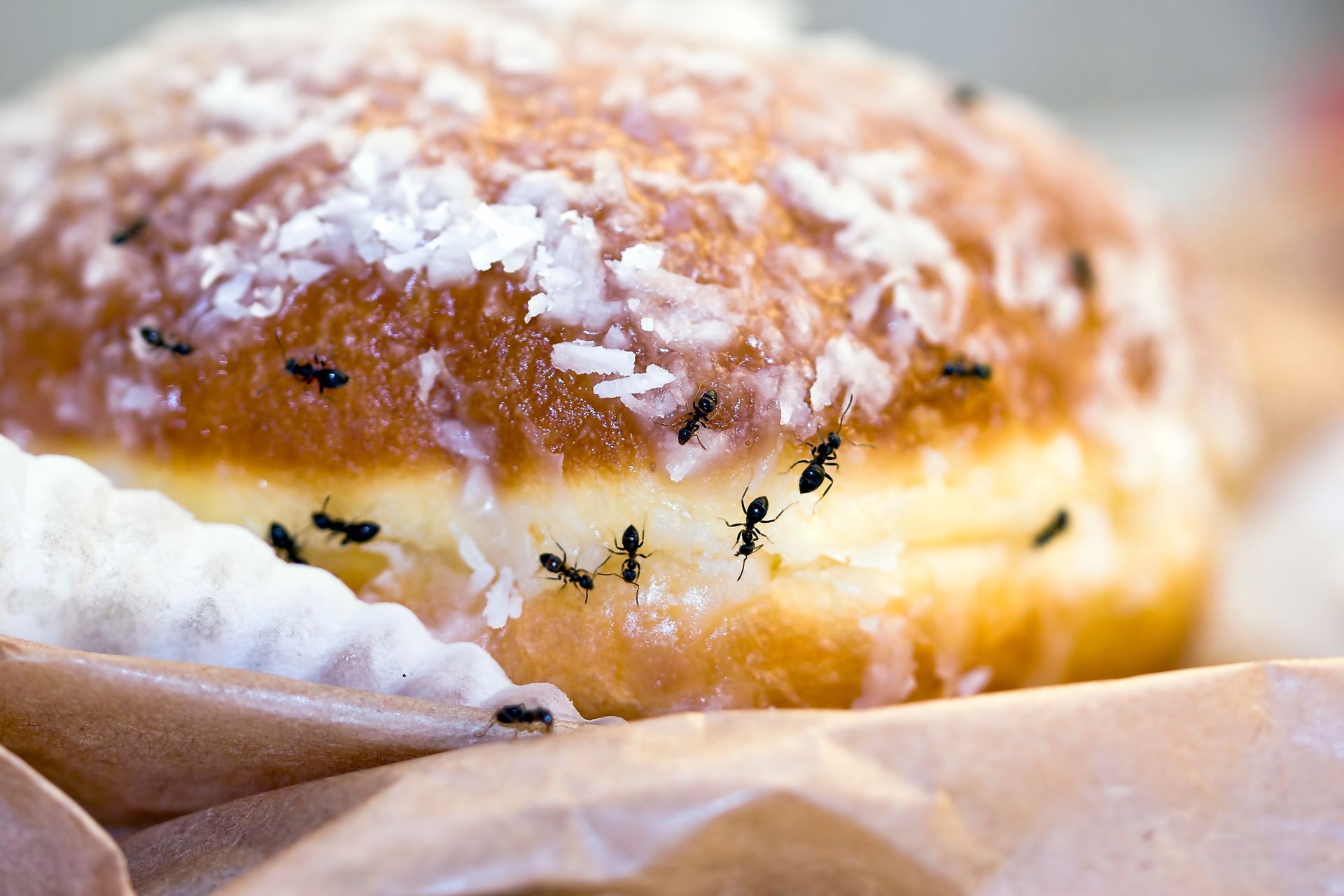
Ants invade homes primarily in search of three essential resources: food, water, and shelter. These highly social insects use sophisticated chemical communication systems to locate and exploit the smallest opportunities in your living space. Understanding what draws ants inside is the first critical step in preventing infestations that can quickly escalate from a minor nuisance to a major household problem.
What Ant Attractants Draw Ants Inside?
Ants possess remarkably sophisticated sensory systems that allow them to detect potential resources from considerable distances. Home invasions by ants result from fundamental biological requirements that motivate their search for resources. The primary attractants fall into three main categories that address fundamental colony needs.
- Food sources provide the energy and nutrients necessary for colony growth and reproduction.
- Water ensures survival, particularly during dry periods when natural sources become scarce.
- Shelter offers protection from predators and environmental extremes while providing suitable conditions for raising brood.
The Science Behind Ant Attraction: How Ants Detect Food and Water
Ants navigate their environment using an intricate chemical detection system that rivals the most advanced technology. Ants possess highly sophisticated olfactory systems, with some species like the carpenter ant (Camponotus floridanus) having over 350 odorant receptor genes and approximately 434 olfactory glomeruli in their antennal lobes which is among the highest numbers found in insects [1] [2]. These chemoreceptors enable ants to detect chemical signals with remarkable sensitivity, allowing them to follow faint pheromone trails and locate distant food sources [3].
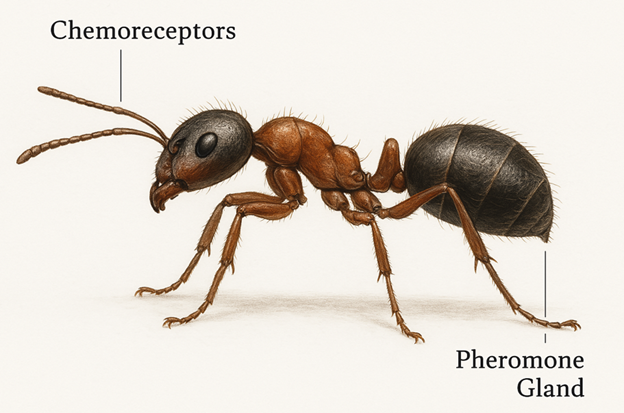
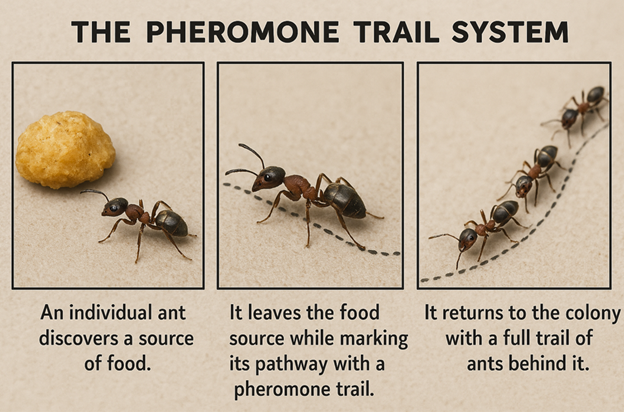
Upon locating food, scout ants establish pheromone pathways that guide colony members to the discovery. This process involves depositing trail pheromones from specialized glands in their abdomen. Each ant species employs unique chemical compounds for trail marking. Argentine ants rely on (Z)-9-hexadecenal, whereas fire ants utilize Z,E-α-farnesene for colony communication. These compounds are selected through evolution to evaporate at rates that maintain trails long enough for recruitment while preventing confusion from old paths [4].
The pheromone communication system operates through positive feedback loops. As more ants follow the trail and find food, they add their own pheromones, strengthening the signal. This explains why a single scout ant can quickly become a steady stream of workers.
What Foods are Ants Attracted To?
Ant dietary preferences vary significantly by species and season, but certain foods consistently prove irresistible across most species. Carbohydrates, particularly simple sugars, rank as the most powerful attractants. Worker ants require readily available energy for their constant activity. Research shows that most ant species prefer sugar solutions between 20-50% concentration, with intake rates increasing with sucrose concentrations [5].
- Proteins become increasingly important during breeding seasons when colonies produce new queens and males. Studies have shown that ant colonies significantly increase their protein foraging when raising larvae. Colonies with developing larvae actively seek more protein-rich foods compared to colonies without larvae, as proteins are essential for larval growth and development [6]. Common protein sources that attract ants include:
o Meat products and cooking residues
o Dairy items, particularly aged cheeses
o Dead insects and arthropods
o Nut butters and seed based products
o Pet food, especially fish based formulas
- Lipids represent another crucial macronutrient for ant colonies. Fats provide concentrated energy storage and are essential for producing reproductive individuals. Kitchen grease, cooking oils, and butter create powerful chemical signals that ants can detect from significant distances.
Are Ants Attracted to Aphids?
The relationship between ants and aphids represents one of nature's most successful mutualistic partnerships. These tiny plant parasites extract nutrients from vegetation and produce honeydew, a carbohydrate-laden secretion. This substance contains not only simple sugars but also amino acids which make it a complete food source for many ant species [7].
Ants actively cultivate aphid populations, protecting them from predators and parasites in exchange for honeydew access. Some ant species even transport aphids to new host plants, essentially practicing a form of agriculture that predates human farming by millions of years. The honeydew produced by a single aphid colony can sustain dozens of ant workers, creating a reliable food source that often leads ants to establish trails from outdoor aphid colonies directly into nearby structures.
This relationship has significant implications for homeowners. Gardens with heavy aphid infestations often experience increased ant activity, and these outdoor populations frequently explore nearby buildings for additional resources. Managing aphid populations through horticultural practices or targeted treatments can substantially reduce ant pressure on homes.
Do Ants Like Sugar?
Sugar represents the gold standard of ant attractants, but the attraction involves more complexity than simple sweetness. Ants demonstrate sophisticated preferences based on sugar concentration, type, and accessibility. Different sugar types elicit varying responses. Common table sugar (sucrose) proves most appealing to ants, with glucose and fructose ranking as secondary preferences. Interestingly, ants can distinguish between different sugar molecules, showing preferences that align with their natural food sources. The physical form of sugar also influences ant behavior. Ants feed more efficiently on liquid sugar solutions than solid crystals due to their liquid-feeding anatomy and the ease of sharing liquid food with nestmates through trophallaxis (mutual feeding).
Do Ants Like Artificial Sweeteners?
Artificial sweeteners present a fascinating case study in ant behavior and sensory biology. Despite their sweetness to human taste receptors, most artificial sweeteners fail to attract ants. This selectivity stems from fundamental differences in how ants detect and evaluate potential food sources. Some artificial sweeteners may even repel ants. Saccharin, for instance, registers as bitter to many ant species, actively discouraging consumption. This selective response demonstrates the evolutionary fine tuning of ant sensory systems to identify genuinely beneficial food sources while avoiding potentially harmful substances.
Do Ants Like Salt?
The ant salt relationship varies dramatically based on geographic location and species ecology. Ant colonies near oceans obtain adequate salt through natural feeding, but those in interior regions frequently face sodium scarcity. This deficiency drives remarkable behavioral adaptations.
Research conducted across North America revealed that ant communities more than 60 miles (100 kilometers) from ocean sources showed significantly stronger attraction to salt baits than sugar baits, with inland ants being far more likely to recruit to salt than coastal ants [8]. This preference intensifies in herbivorous and omnivorous species that lack regular access to sodium rich prey.
The physiological need for sodium extends beyond simple nutrition. Sodium plays essential roles in ant physiology, including neural transmission, muscular movement, and maintaining proper hydration levels. Worker ants are constantly active and lose electrolytes through exertion so they show particularly strong salt seeking behavior during hot weather when dehydration risk increases.
Are Ants Attracted to Water?
Water represents a critical limiting resource for ant colonies, particularly in arid regions or during seasonal droughts. Unlike food, which ants can store, water must be continuously procured to maintain colony hydration. Worker ants dedicate substantial foraging effort to locating and exploiting water sources.
Ants detect water through hygroreceptors which are specialized sensory organs that measure humidity gradients. Common household water attractants include:
- Condensation on air conditioning units and pipes
- Pet water bowls and aquarium edges
- Overwatered houseplants and saucers
- Bathroom fixtures with slow leaks
- Kitchen sink splash zones
- Refrigerator drip pans
Carpenter ants show particular affinity for moisture, as damp wood provides ideal nesting conditions. This behavior makes bathroom leaks and roof damage especially attractive to carpenter ant colonies.
Are Ants Attracted to Lights?
The relationship between ants and artificial lighting involves complex behavioral responses that vary by species and reproductive status. Worker ants generally avoid bright illumination, conducting their foraging activities in shadowed or darkened areas. This light-avoidance strategy reduces exposure to threats and prevents moisture loss.
However, reproductive ants exhibit strong positive phototaxis during nuptial flights. These winged individuals use light sources for navigation during mating swarms, explaining why flying ants often congregate around porch lights and windows during their brief dispersal period. Light-seeking behavior occurs exclusively during mating periods and ceases once reproduction concludes.
Some species demonstrate more nuanced responses to lighting. Nocturnal species like carpenter ants may use artificial lights as navigation landmarks while maintaining their preference for darkness during actual foraging. This behavior can inadvertently lead them toward illuminated entry points like doorways and windows.
Common Types of Ants That Invade Homes
Understanding the specific ant species invading your home proves crucial for effective management, as different species exhibit distinct preferences and behaviors. Each species has evolved unique adaptations that influence their attraction patterns and invasion strategies.
- Odorous House Ants (Tapinoma sessile): These small brown ants emit a distinctive rotten coconut odor when crushed. They show extreme preference for sweet liquids and can form massive super colonies with multiple queens. Their shallow nesting habits allow them to establish satellite colonies in wall voids, making them persistent household invaders.
- Carpenter Ants (Camponotus spp.): North America's largest common ant species primarily seeks water damaged wood for nesting. They don’t actually consume the wood but they will tear off tiny shreds to open up caverns that they house their broods within. They forage for both proteins and carbohydrates, with seasonal preferences shifting based on colony needs.
- Pavement Ants (Tetramorium caespitum): Originally from Europe, these ants typically nest under concrete but readily invade homes for food. They're omnivorous opportunists that are equally attracted to grease, seeds, and sugars. Their small size allows entry through minute cracks in foundations.
- Pharaoh Ants (Monomorium pharaonis): These tiny yellow ants pose significant challenges due to their budding reproduction strategy. When disturbed, colonies split into multiple new colonies, making control difficult. They show strong preferences for proteins and fats, often invading hospitals and food facilities.
- Argentine Ants (Linepithema humile): Highly invasive and aggressive, these ants form massive supercolonies that can span entire neighborhoods. They monopolize food resources and displace native species. Their preference for sweet liquids and tendency to tend aphids makes them common in gardens and kitchens.
- Thief Ants (Solenopsis molesta): Among the tiniest household ants, they often nest near larger ant colonies to steal food and brood. Their size allows access through seemingly impossible spaces. They prefer greasy foods and proteins over sugars (Thompson, 1990).
How Do Ants Get Inside My Home?
Ants exploit numerous entry points that often escape human notice. Their small size and flexible exoskeletons allow passage through openings as narrow as 1/32 of an inch which is thinner than a credit card.
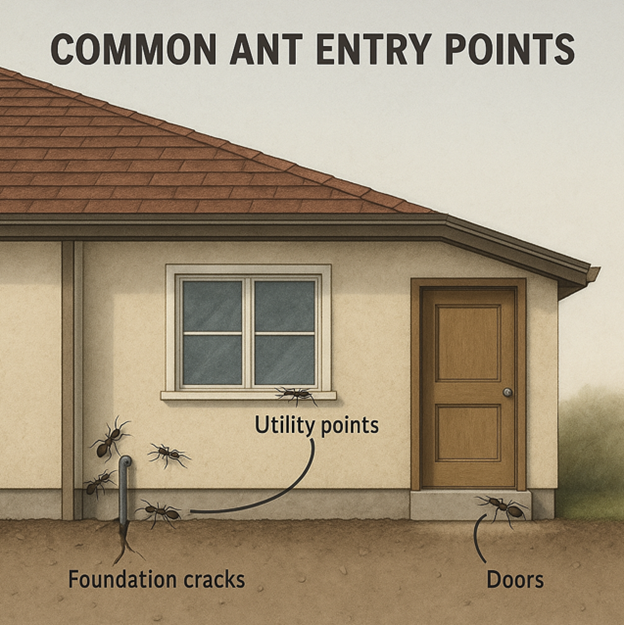
Common entry routes include:
- Foundation Interfaces: The junction between foundation and siding creates gaps through settling and thermal expansion. Ants follow these seams, using them as protected highways into wall voids. Foundation settling and aging produce microscopic fissures that serve as entry corridors for entire ant colonies.
- Utility Penetrations: Every pipe, wire, and cable entering your home creates a potential breach. The spaces around these utilities, even when caulked, can develop gaps through vibration and temperature cycling. Ants frequently follow electrical wires, as the slight warmth attracts them during cooler months.
- Window and Door Frames: Weather stripping deteriorates, creating gaps that ants exploit. The weep holes designed for window drainage provide direct access to interior wall spaces. Door sweeps that don't maintain complete ground contact leave highways for ant traffic.
- Vegetation Bridges: Tree branches, shrubs, and climbing vines that contact structures create aerial highways. Vegetation bridges enable ants to circumvent foundation treatments and reach elevated access locations. Even grass growing against foundations can shelter ant trails from detection and treatment.
Are Ants Looking for New Places to Establish Nesting Sites?
Colony reproduction drives significant ant movement into structures. Mature colonies produce new queens and males annually, typically during species specific seasons. These reproductive individuals seek suitable nesting sites, and human structures often provide perfect conditions.
Indoor nesting occurs when ants discover optimal microenvironments within buildings. Wall voids offer protection from predators and weather while maintaining stable temperatures. Insulation materials provide excavation medium similar to soil. Moisture from plumbing leaks or condensation creates the humidity many species require for brood development.
Satellite colony formation represents another invasion pattern. Many ant species establish secondary nests connected to the main colony through chemical trails. These satellites serve as forward bases for foraging and can eventually become independent colonies. Kitchen and bathroom areas frequently harbor satellites due to reliable food and water access.
Why Do Ants Come Inside During Different Seasons?
Seasonal patterns strongly influence ant invasion behavior, with each season presenting unique challenges that drive ants indoors.
- Spring: As soil temperatures reach species specific thresholds, typically 50-60°F, overwintered colonies resume activity. Queens increase egg production which creates massive demand for proteins to feed developing larvae. Worker populations, depleted by winter mortality, desperately seek easily accessible food sources. This "spring hunger" drives aggressive foraging into any available space.
- Summer: High temperatures and drought conditions create water stress for outdoor colonies. Soil moisture drops below critical levels which forces ants to seek alternative water sources. Air conditioned homes also provide cool refuges from extreme heat. Additionally, summer represents peak reproduction season for many species, increasing overall activity and food demand).
- Fall: Decreasing temperatures trigger preparation behaviors for winter survival. Colonies seek protected nesting sites with stable temperatures. Workers forage intensively to build up food reserves, showing increased attraction to fats and proteins. Many species move entire colonies into structures during this period, establishing permanent indoor populations.
- Winter: In temperate regions, outdoor colonies enter dormancy, but heated buildings allow continued activity. Indoor populations maintain year round foraging, often becoming more noticeable as they're the only active ants. Foundation heating creates warm zones that attract dormant outdoor colonies, leading to mid-winter invasions during brief warm spells.
Where Are Ants Most Attracted To?
Certain areas within homes create perfect storms of ant attractants, combining multiple resources in easily accessible locations. These hotspots deserve special attention in prevention efforts.
Kitchen
Kitchen spaces contain multiple ecological niches that provide ideal conditions for ant establishment. Modern kitchens generate extraordinary amounts of food residue. Even seemingly clean kitchen surfaces can harbor microscopic food residues that are undetectable to humans but easily sensed by foraging ants. Common accumulation sites include:
- Gaps between appliances and countertops
- Under refrigerator gaskets and kick plates
- Inside cabinet hinges and drawer slides
- Behind backsplashes where grout has failed
- Around sink fixtures and garbage disposals
Water sources abound through dripping faucets, dishwasher connections, and refrigerator ice makers. The warm, humid microclimate under dishwashers provides ideal conditions for satellite colonies. Pet feeding areas multiply attractants by combining protein rich foods with water bowls which are often refreshed multiple times daily and left completely out in the open.
Bathroom
Bathrooms offer consistent moisture that many ant species require for survival. The combination of high humidity, warmth, and occasional organic matter creates suitable colony conditions. Pharaoh ants and carpenter ants show particular affinity for bathroom environments.
Moisture accumulates through multiple sources beyond obvious water fixtures. Shower steam condenses in wall cavities, creating hidden moisture pockets. Toilet wax rings deteriorate, allowing slow seepage that maintains wood moisture content perfect for carpenter ant excavation. Damp textiles in bathrooms facilitate ant movement by maintaining humid corridors linking colonies to water supplies.
Surprisingly, bathrooms also provide food sources. Toothpaste contains sweeteners and proteins. Soap residues include fats and fragrances that attract certain species. Dead skin cells and hair provide protein sources for opportunistic species. Medicine cabinets may contain sweet liquid medications or supplements that prove irresistible to foraging ants.
Bedroom
While bedrooms typically offer fewer resources than kitchens or bathrooms, they still attract ants under specific conditions. The primary attractant involves food brought into sleeping areas which is a behavior that significantly increases ant encounter risk.
Bedroom ant invasions often trace to seemingly minor attractions:
- Breakfast in bed leaving invisible crumb trails
- Candy wrappers in nightstand drawers
- Spilled beverages absorbed by carpet fibers
- Pet sleeping areas with scattered food
How to Prevent Ants
Prevention requires systematic elimination of attractants combined with exclusion techniques. Successful prevention addresses all three attraction factors simultaneously while considering seasonal patterns and species specific behaviors.
- Sanitation Protocols: Implement daily cleaning routines that target microscopic food residues. Wipe counters with dilute vinegar solutions that remove both food particles and pheromone trails. Vacuum with HEPA filtration to capture protein rich dust and dander. Store food in glass or heavy plastic containers with gasket seals.
- Moisture Management: Repair all plumbing leaks immediately, as even minor drips sustain ant colonies. Install bathroom exhaust fans that vent outside, reducing condensation. Maintain indoor humidity below 50% using dehumidifiers in problem areas. Maintain appropriate soil slopes near building perimeters to prevent water accumulation.
- Exclusion Techniques: Seal entry points using appropriate materials like silicone caulk for static joints, expandable foam for larger gaps, and steel wool for holes that may be gnawed larger. Apply door sweeps that maintain complete ground contact. Install fine mesh screens over weep holes and foundation vents.
- Landscape Modification: Maintain an 18 inch vegetation free zone around foundations. Trim tree branches to eliminate structural contact. Remove wood mulch near foundations and replace it with gravel that doesn't retain moisture. Eliminate wood to soil contact that attracts carpenter ants.
How to Get Rid of Ants
When prevention fails and ants establish indoor presence, systematic elimination becomes necessary. Successful control requires accurate species identification, thorough treatment, and patience because incomplete efforts often worsen infestations by causing colony budding.
Initial response should focus on eliminating attractants while gathering intelligence. Follow ant trails to identify entry points and potential nest locations. Note peak activity times and preferred foods. This information guides targeted treatment selection.
Modern ant baits combine attractants with slow acting toxicants that workers share throughout the colony through trophallaxis (mutual feeding). Successful baiting requires:
- Selecting baits matching current food preferences
- Placing multiple small placements along trails
- Avoiding cleaning that disrupts trails during treatment
- Maintaining baits until all activity ceases
- Understanding that increased activity initially indicates success
Professional intervention becomes necessary when DIY efforts fail or certain conditions exist. Large carpenter ant colonies require specialized treatment to eliminate satellite nests. Pharaoh ant infestations demand expertise to prevent budding. Multiple trails from different directions suggest complex infestations beyond homeowner capabilities.
When DIY Isn't Enough: Signs You Need Professional Pest Control
Recognizing when ant problems exceed DIY solutions prevents costly damage and prolonged infestations. Several indicators suggest professional intervention will prove more effective and economical than continued self-treatment attempts.
- Multiple Active Trails: Discovering ant trails in several rooms simultaneously indicates extensive colonization. Professional grade inspections can locate hidden nests that escape visual detection. Technicians can identify whether you're dealing with one large colony or multiple smaller ones which is critical information for treatment selection.
- Persistent Reinfestation: Ants returning within days or weeks of treatment suggest incomplete colony elimination. This pattern often indicates satellite colonies or budding behavior. Professionals understand species specific biology and can implement strategies preventing colony fragmentation. They also access restricted use products with transfer effects superior to consumer baits.
- Structural Damage Evidence: Sawdust piles beneath wooden elements indicate active carpenter ant excavation. These large ants can compromise structural integrity over time, making rapid elimination crucial. Professionals combine moisture remediation recommendations with targeted treatments to help address both immediate infestations and conducive conditions.
- Species Identification Uncertainty: Proper identification drives successful treatment, but many ant species appear nearly identical to untrained eyes. Pharaoh ants require entirely different approaches than odorous house ants. Misidentification leads to treatment failure and potentially worsens infestations through inappropriate control methods causing budding.
- Health Sensitive Environments: Homes with infants, elderly residents, or immunocompromised individuals require extra care in pest management. Professionals understand product selection and application techniques that minimize exposure while maximizing effectiveness. They also carry insurance and follow strict safety protocols protecting your family.
Contact EcoForce Pest Control if You Are Dealing with Ants
When ants transform from minor nuisance to persistent problem, EcoForce Pest Control provides the expertise and solutions necessary for complete elimination. Our trained technicians understand the complex biology driving ant behavior and implement targeted strategies that address root causes rather than just visible symptoms. EcoForce's complete ant elimination service starts with detailed property assessment utilizing professional-grade equipment. We identify all active colonies, entry points, and conducive conditions contributing to your infestation. Contact EcoForce Pest Control today for professional assessment and guaranteed results.
Ant Attractant FAQs
What are ants most attracted to?
Ants show strongest attraction to sweet substances, particularly liquid sugars at 20-50% concentration. However, attraction varies by species and season. Protein is the primary attractant during breeding seasons which changes as the colony shifts away from reproduction to survival. Moisture also ranks as a critical attractant, especially for carpenter ants seeking nesting sites.
Why do I suddenly have tiny ants?
Sudden ant appearances typically result from scouts discovering new resources or environmental changes driving colonies indoors. Weather events like heavy rain or drought force ants to seek alternative shelter and water. Indoor temperature changes, new food sources, or structural modifications can trigger rapid colonization by opportunistic species like thief ants or pharaoh ants.
What keeps ants away?
Effective ant deterrence combines removing attractants with physical and chemical barriers. Eliminating food residues, fixing water leaks, and sealing entry points provides fundamental protection. Natural deterrents like cinnamon, peppermint oil, and diatomaceous earth can supplement but not replace comprehensive prevention strategies. Professional perimeter treatments create lasting chemical barriers.
What attracts ants if there is no food?
Water often attracts ants even in food's absence, particularly during dry conditions. Ants also seek suitable nesting sites offering proper temperature and humidity. Certain ant varieties exhibit unexplained attraction to electromagnetic emissions from household electronics and power sources. Carpenter ants specifically seek water damaged wood regardless of food availability. Even clean homes can attract ants seeking shelter from extreme weather.
Why are ants worse after treatment?
Increased ant activity immediately following treatment indicates bait acceptance and colony stress. Dying ants release alarm pheromones that stimulate increased foraging. Some treatments cause "budding," where colonies split into multiple units. This temporary surge typically resolves within 1-2 weeks as the toxicant spreads throughout the colony. Professional treatments account for this behavior pattern.
Can ants damage my home?
Carpenter ants cause significant structural damage by excavating wood for nesting galleries. While they don't consume wood like termites, their tunneling weakens structural members over time. Other species cause indirect damage like moisture seeking ants which can indicate leaks requiring repair, while ants in electrical equipment can cause shorts and fires. Some species also contaminate food supplies and spread bacteria.
Start Being Pest Free Today!
Contact Us