Fungus Gnats in Houseplants: How to Get Rid of Them
You lift the watering can over your pothos, and several tiny black flies spring from the soil. One lands on the rim. Another circles the nearest window, while a third hovers inches from your face. Those insects are likely fungus gnats, and the damp potting mix is giving them a place to reproduce.
Fungus gnats in houseplants usually cause more frustration than serious plant damage. The adults are easy to spot, but eggs and fungus gnat larvae remain hidden below the surface. This guide explains why the infestation started, how to get rid of fungus gnats, and what you can change to keep them from returning.
How to Identify Fungus Gnats in Houseplants
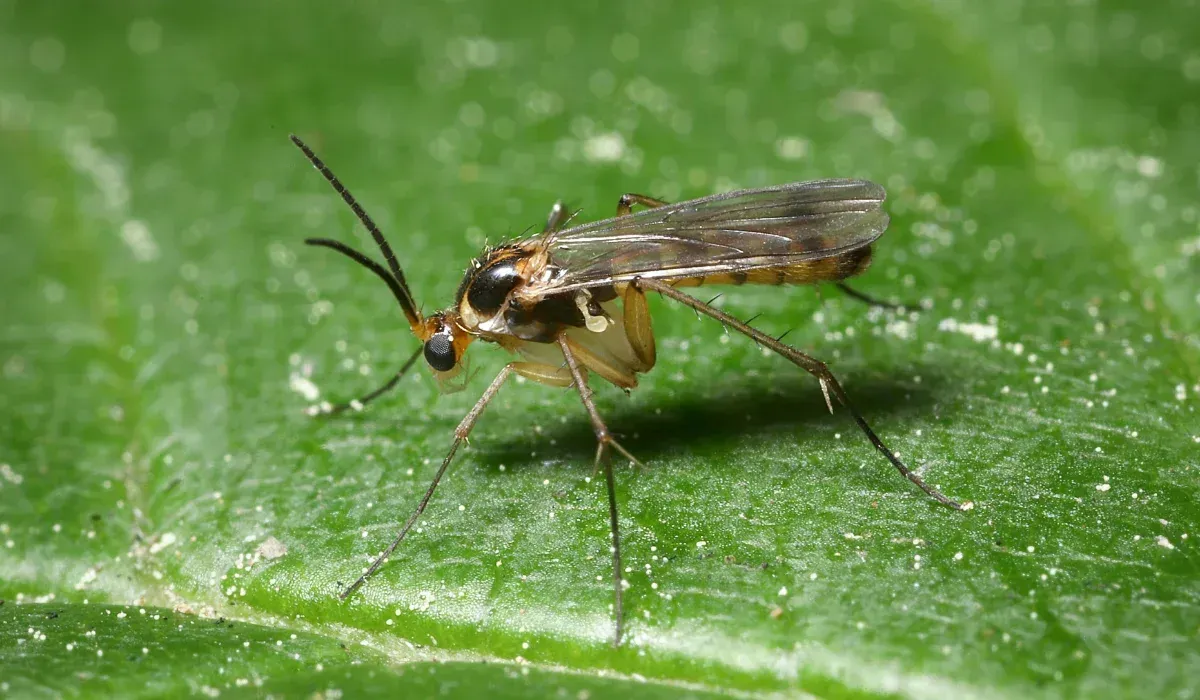
Adult fungus gnats are thin, dark flies with long legs and narrow antennae. At about 1/8 inch long, they look like miniature mosquitoes. Their flight is weak and wandering, so they usually stay close to pots, windows, lamps, and other nearby light sources.
Tap the side of a suspected pot or gently disturb the soil surface. Houseplant gnats may run across the growing mix before making a short flight. That behavior is different from fruit flies gathering near produce or drain flies resting around sinks and floor drains.
Fungus Gnats Compared With Other Small Flies
Color alone does not provide a reliable identification. The location, movement, and breeding material give you better clues.
| Feature | Fungus Gnats | Fruit Flies | Drain Flies |
|---|---|---|---|
| Appearance | Thin, dark, and mosquito-like | Rounded, tan, or brown | Fuzzy with broad wings |
| Common location | Houseplants and moist soil | Produce, trash, and recycling | Sinks, tubs, and floor drains |
| Movement | Weak, wandering flight | Faster flight around food | Short flights near plumbing |
| Breeding material | Damp organic potting mix | Fermenting food residue | Organic buildup inside drains |
| First place to inspect | Soil surface and plant saucer | Fruit bowl and waste containers | Drain walls and covers |
Fungus gnat larvae look nothing like the adults. They are pale or nearly transparent, with a small black head, and may reach about 1/4 inch long. You are unlikely to notice them unless you inspect the upper layer of moist potting soil closely.
Why Fungus Gnats Live in Potting Soil
Your plant’s leaves are not the main attraction. Adult females search for moist soil that contains fungi, algae, dead roots, and decaying plant material. These conditions give newly hatched larvae both food and shelter.
Commercial potting mix often contains bark, peat, compost, or coconut fiber. These materials help indoor plants retain water, but they can also stay damp long enough to support gnats in potting soil. Fallen leaves and spent flowers add another food source when they remain on the surface.
Overwatered Houseplants Are Only Part of the Problem
Frequent watering is a common cause of a fungus gnat infestation, but poor drainage can produce the same result. A reasonable amount of water may linger in compacted soil, an oversized pot, or a decorative container without open drainage holes.
Light and temperature matter too. A plant may use water quickly during a bright summer, then dry much more slowly during a cool or cloudy week. Check the soil moisture before watering instead of following the same schedule year-round.
| Pot Condition | What Happens | Practical Correction |
|---|---|---|
| The surface stays damp | Females find a suitable place to lay eggs | Let the upper soil dry when the plant tolerates it |
| Water remains in the saucer | The bottom of the pot stays saturated | Empty the saucer after drainage stops |
| Drainage holes are blocked | Excess water cannot leave | Clear the holes or change containers |
| Dead leaves cover the soil | Larvae gain more organic food | Remove fallen plant material |
| The mix feels dense or muddy | Airflow and drainage decline | Replace failing soil when repotting |
| The pot is too large | Unused soil holds water longer | Choose a pot closer to the root ball’s size |
Bottom watering can help keep the surface drier in some containers, but it does not fix every moisture problem. The lower portion of the pot can still remain saturated if you leave it sitting in water. Remove the container once the growing mix has absorbed enough moisture, then allow it to drain.
Why a Fungus Gnat Infestation Keeps Returning
Swatting the adults may reduce the visible activity for a day, but another group may already be developing beneath them. Eggs, larvae, pupae, and adults can occupy the same pot at once. That overlap makes fungus gnat control feel inconsistent when you treat only the flies you can see.
The Colorado State University Extension reports that one female fungus gnat may lay up to 200 eggs during her seven-to-ten-day adult life. At indoor temperatures between 65°F and 75°F, the full cycle from egg to adult may take only three to four weeks.
What Happens Below the Soil Surface
Females place eggs in cracks near the top of damp growing media. Once the eggs hatch, fungus gnat larvae feed and grow within the pot before becoming pupae. New adults then leave the soil, mate, and begin another generation.
That timetable is why gnats may disappear briefly and return. Yellow sticky traps can catch many adults during the first week, while larvae in the same pot continue to mature.
| Life Stage | Main Location | Activity | Why It Matters |
|---|---|---|---|
| Egg | Near the damp soil surface | Develops out of sight | Drier conditions make the site less favorable |
| Larva | Upper 2 to 3 inches of growing mix | Feeds on fungi and organic material | This is the main stage to target in the pot |
| Pupa | In or on the potting mix | Develops into an adult | Adult traps cannot reach it |
| Adult | Soil, pot rims, windows, and lights | Mates and lays eggs | Traps reduce numbers and track progress |
Can Fungus Gnats Damage Plant Roots?
Adult fungus gnats do not bite people or pets. They also do not chew leaves, clothing, wood, or household materials. In most homes, the adults are a nuisance rather than a threat.
Large numbers of larvae can feed on fine plant roots and root hairs. Healthy, established houseplants usually tolerate limited feeding, but seedlings, cuttings, and plants already stressed by wet soil have less protection.
The University of Wisconsin Horticulture describes most household infestations as cosmetic problems. It also notes that root damage can occur when larval populations become large.
Yellow leaves do not automatically prove that larvae are feeding on the roots. Persistently wet soil can restrict oxygen and contribute to root decline on its own. In many cases, the watering or drainage problem harms the plant more than the insects do.
How to Get Rid of Fungus Gnats in Houseplants
Start with the pot instead of chasing the adults around the room. A useful treatment plan reduces excess moisture, captures adult fungus gnats, and targets the larvae developing in the growing mix. Skipping one of those steps can allow the population to rebuild.
Let the Upper Soil Dry
Allow the top 1 to 2 inches of potting mix to dry when the plant can safely tolerate it. Drier surface conditions make the pot less attractive to egg-laying females and less suitable for young larvae.
Moisture-loving plants may need a more cautious adjustment than succulents or other plants adapted to dry conditions. Check the care requirements for each plant rather than applying the same watering rule to an entire collection.
Empty saucers and decorative outer pots after watering. Water trapped beneath a nursery container can keep the growing media wet even when the surface feels dry. Remove fallen leaves and spent flowers at the same time.
Use Yellow Sticky Traps for Adult Gnats
Place yellow sticky traps close to the soil surface. Adult fungus gnats spend much of their time walking around the pot or making short flights nearby, so low placement catches more of them than a trap positioned above the leaves.
Check the traps every few days. A falling number of adults suggests that the treatment plan is working. Sticky traps do not kill fungus gnat larvae, so keep addressing the potting mix while monitoring the adults.
Target Fungus Gnat Larvae When Needed
Some products containing Bti are labeled for fungus gnat larvae. The U.S. Environmental Protection Agency identifies fungus gnats among the insects affected during their larval stage.
Read the complete product label before applying a treatment to indoor plants. The label should permit the intended use and explain the correct mixture, application method, and treatment interval. Do not assume that every product containing the same active ingredient is approved for houseplant soil.
Beneficial nematodes sold for fungus gnat control may work well in greenhouses or large plant collections. Storage, temperature, and soil conditions affect their performance. For one lightly infested plant, moisture correction and yellow sticky traps may be simpler.
Repot Only When the Growing Mix Has Failed
A few adult gnats do not automatically mean the plant needs fresh potting soil. Repot when the mix smells sour, remains waterlogged, has become badly compacted, or no longer drains through the container.
Use a clean pot with open drainage holes and a growing mix suited to the plant. Avoid moving a small root system into a much larger container, since the unused soil can hold moisture for too long.
How to Prevent Fungus Gnats From Returning
Inspect new indoor plants before placing them beside an established collection. Look for small flies around the rim, algae on the soil, dead leaves, and growing mix that appears saturated. Keeping a new plant separate for two or three weeks gives hidden activity time to appear.
Store fresh potting soil in a closed, dry container. Open bags left on a garage or patio floor can absorb moisture and collect organic debris. Clean spilled soil from plant shelves, remove standing water from trays, and discard dead leaves before they break down.
Make Sure the Plants Are the Real Source
Flies that rise mainly when you water a pot are likely connected to the growing media. Activity in kitchens, bathrooms, closets, or rooms without plants points toward another breeding site.
Check drains, plumbing areas, trash containers, and locations with persistent moisture. Treating houseplants will not solve a drain fly problem or an infestation supported by a hidden leak.
Stop Recurring Indoor Fly Problems at Their Source
A light fungus gnat infestation often improves once you correct soil moisture, improve drainage, remove plant debris, and monitor adults with yellow sticky traps. Larval treatment may be necessary when several pots are involved or new gnats continue appearing after your watering routine changes.
Professional service makes sense when you cannot identify the fly or locate the breeding area. Small indoor flies can develop in drains, wet debris, plumbing leaks, and other concealed locations. Treating the wrong source wastes time and allows the real population to continue.
EcoForce Pest Management can inspect homes, identify the insect, and trace the moisture or organic material supporting it. That inspection gives you a treatment plan based on the actual breeding site instead of another round of guesswork. Contact EcoForce when flies spread beyond the plants, return after repeated treatment, or appear throughout several rooms.
Start Being Pest Free Today!
Contact Us