Flying Ants with Wings
Encountering winged ants around your property can be both fascinating and concerning for homeowners. These aerial insects represent a crucial phase in ant colony development, but their sudden appearance often signals potential establishment of new colonies nearby. Understanding the biology, behavior, and management strategies for flying ants enables property owners to make informed decisions about prevention and control measures when these reproductive insects emerge during their seasonal flights.
What Are Alates and What is Their Purpose?
Alates represent the reproductive caste of ant colonies which consisting of winged males and virgin queens that emerge during specific seasonal periods to establish new colonies. These winged reproductive ants contribute to geographical expansion in ant populations through their dispersal flights and mating with individuals from different colonies [1]. These specialized individuals develop within established colonies through complex hormonal and environmental cues that trigger their transformation from typical worker ant larvae into winged reproductives. The biological purpose of alates extends beyond simple reproduction to encompass critical ecological functions including population dispersal, genetic exchange between distant colonies, and colonization of new habitats.
What Do Alates Look Like?
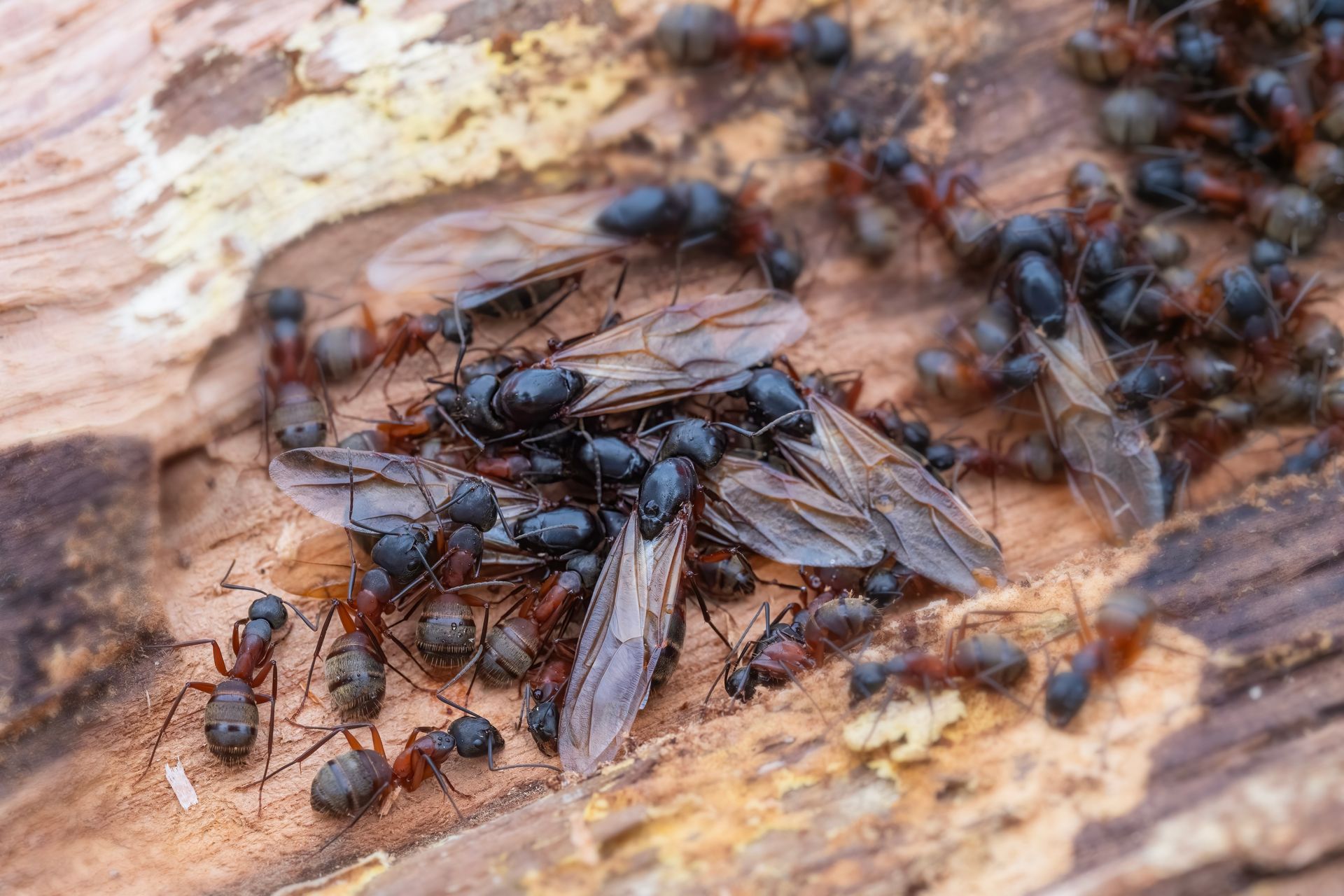
Flying ants exhibit distinct morphological characteristics that differentiate them from both worker ants and other winged insects. Flying ants display distinctly uneven wing sets, where the front pair dramatically overshadows the smaller rear wings in size, producing a characteristic lopsided silhouette that serves as a reliable diagnostic feature. Their bodies typically appear more robust than worker ants, with enlarged thoracic regions to accommodate flight muscles and reproductive organs. The head structure often differs as well, with males displaying more prominent eyes and antennae compared to workers of the same species. Size variations among alates depend heavily on their sex and species, with queens generally measuring significantly larger than males. Coloration patterns vary among species but commonly include darker pigmentation than worker ants, with many species displaying reddish brown, black, or dark amber hues.
Flying Ants vs Termites
Distinguishing between flying ants and termite swarmers requires careful observation of several key anatomical features. Flying ants possess distinctly pinched waists (petioles) that create clear separation between the thorax and abdomen, while termites display broad, uniform body segments without obvious constriction. Antennae structure provides another reliable identification criterion, with ants exhibiting elbowed antennae compared to the straight, beaded antennae characteristic of termites. Wing size differences offer additional identification opportunities, as ant alates display unequal wing pairs with prominent size differences between fore and hind wings. Reproductive termites feature four uniformly sized wings that project conspicuously past their body's end while stationary, creating an elongated appearance that distinguishes them from other winged insects.
Female vs Male Flying Ants
Sexual dimorphism in flying ants creates notable size and behavioral differences between reproductive males and females. Female alates, destined to become future queens, develop larger body sizes to accommodate extensive reproductive organs and energy reserves necessary for colony reproduction. These females undergo more complex developmental processes, requiring specialized nutrition and care within the parent colony before reaching reproductive maturity. Research indicates that juvenile hormone influences queen development during specific JH-sensitive periods in late larval instars, with applications of juvenile hormone analogs to third and fourth instar larvae inducing queen development in certain species [2].
Male alates exhibit smaller body sizes and simplified internal anatomy focused primarily on reproductive functions. Their primary biological purpose involves locating and mating with virgin queens during nuptial flights, after which they die within days or weeks. Males possess enhanced sensory capabilities, including enlarged compound eyes and sensitive antennae adapted for detecting female pheromones during flight dispersal events.
What is the Nuptial Flight?
The nuptial flight represents a precisely timed reproductive event during which winged ants emerge from their parent colonies to mate and establish new populations. This synchronized aerial mating ritual occurs when environmental conditions align with internal colony development cycles, typically triggered by specific temperature, humidity, and atmospheric pressure combinations.
Before the Flight
Preparation for nuptial flights begins weeks or months before the actual emergence event, involving complex physiological and behavioral changes within ant colonies. Parent colonies increase alate production through modified larval feeding regimens and specialized care provided by worker ants. Environmental monitoring by worker ants helps determine optimal flight timing, with colonies often synchronizing their releases with neighboring populations of the same species to maximize mating success and genetic diversity.
Temperature accumulation models published in Environmental Entomology demonstrate that many ant species require specific degree day thresholds before triggering alate emergence. Atmospheric pressure changes, often associated with approaching weather fronts, serve as additional environmental cues that help coordinate synchronized flights across multiple colonies. Worker ants modify their behavior in the days preceding flights, creating exit pathways and removing obstacles that might impede alate emergence from underground chambers.
During the Flight
Nuptial flight behavior involves complex aerial mating displays and courtship rituals that vary significantly among ant species. Virgin queens typically release pheromones to attract males, creating chemical plumes that guide male flight patterns and facilitate encounters between reproductives from different colonies. Mating occurs in flight or immediately after landing, with successful queens receiving sperm stores that will last throughout their reproductive lifetimes, potentially spanning decades in some species. Flight duration and altitude vary considerably depending on species and environmental conditions, with some alates remaining airborne for hours while others complete their reproductive activities within minutes. Multiple mating events often occur during single flights, with queens collecting sperm from several males to ensure genetic diversity in their future offspring.
After the Flight
Post flight activities mark the critical transition from reproductive flight to colony establishment, representing the most vulnerable period in the ant life cycle. Successfully mated queens land and immediately begin searching for suitable nesting sites, often removing their wings shortly after landing to conserve energy for excavation and initial egg laying activities. Wing shedding involves specialized muscle contractions that break predetermined fracture lines, leaving characteristic wing stubs that identify recently mated queens.
Colony founding success depends heavily on the queen's ability to locate protected nest sites with adequate moisture and food resources. Research indicates that queen survival rates during the founding period range from 2-10% depending on species and environmental factors [3]. Queens that successfully establish nests enter a claustral phase, during which they rely entirely on internal energy reserves to produce their first worker offspring without foraging outside the nest chamber.
Are Flying Ants Dangerous?
Flying ants pose minimal direct threats to human health and safety, with most species lacking the ability to bite or sting effectively during their aerial reproductive phases. The primary focus of alates involves mating and dispersal rather than defensive behaviors, making aggressive encounters with humans extremely rare. However, some species retain their defensive capabilities during flight periods, particularly carpenter ants and fire ants, which can deliver painful bites or stings if handled directly.
Property damage concerns represent more significant risks than personal safety issues, as flying ants may indicate the presence of established colonies that could affect structural integrity. Carpenter ant alates suggest existing colonies that excavate galleries in wooden structures, potentially weakening building materials over time.
When Are Flying Ants Active?
Flying ant season follows predictable seasonal patterns that correspond with optimal environmental conditions for colony establishment and survival. Most temperate species schedule their nuptial flights during late spring through early fall, with peak activity occurring during warm, humid periods following precipitation events. Research from multiple peer-reviewed studies indicates that nuptial flights often occur during specific environmental conditions, particularly following rainfall when humidity is elevated and weather conditions are calm, with studies showing that rain is one of the commonest triggering stimuli for ant mating flights [4].
Species specific timing creates distinct seasonal peaks in flying ant activity, with carpenter ants typically swarming during late spring, while harvester ants often emerge during late summer or early fall. Urban heat island effects can advance flight timing in metropolitan areas, with city populations emerging weeks earlier than rural counterparts of the same species. Climate change research published in Global Change Biology suggests that warming temperatures may be altering traditional flight timing patterns, potentially affecting reproduction success and ecological relationships.
Do All Ants Develop Wings?
Wing development occurs exclusively among reproductive castes within ant colonies, representing a specialized adaptation limited to males and virgin queens. Worker ants, which comprise the majority of colony populations, remain wingless throughout their lives as their biological functions focus on foraging, brood care, and colony maintenance rather than reproduction.
The timing and frequency of alate production varies significantly among species and depends on colony age, size, and environmental conditions. Young colonies typically require several years of growth before producing their first reproductive individuals, while mature colonies may generate alates annually or in response to specific environmental triggers. Some species produce multiple generations of alates within single seasons, while others may skip reproductive flights during unfavorable years, demonstrating the flexible nature of ant reproductive strategies.
What Are Flying Ants Attracted To?
Flying ants respond to various environmental stimuli during their dispersal flights, with light sources representing one of the most significant attractants. Artificial lighting can disrupt natural navigation systems, causing alates to become disoriented and accumulate around outdoor fixtures, windows, and illuminated structures. Moisture gradients also influence flying ant behavior, as newly mated queens require adequate humidity levels for successful nest establishment. Areas with consistent moisture sources including irrigation systems, water features, and poorly drained soil attract dispersing queens seeking favorable founding sites. Chemical attractants, including pheromones released by established colonies, can influence flight patterns and landing site selection, though these effects typically operate over relatively short distances.
What Attracts Ants with Wings Outdoors?
Outdoor environments provide numerous attractants that influence flying ant behavior and colony establishment patterns. Sunny, open areas with minimal vegetation offer ideal conditions for nuptial flights, as unobstructed airspace facilitates mating encounters and reduces collision risks during aerial activities. Decaying organic matter, including fallen logs, compost piles, and leaf litter, attracts certain ant species that utilize these materials for nest construction and initial food sources. Carpenter ant queens specifically seek out moist, partially decayed wood that provides nesting sites for early colony development. Landscape features such as rock walls, mulched areas, and established gardens create microhabitats that support various ant species and may concentrate flying ant activity during emergence periods.
What Attracts Ants with Wings Indoors?
Indoor environments attract flying ants through various pathways and conditions that simulate favorable outdoor nesting sites. Food sources represent primary attractants, with sugary substances, protein rich materials, and organic debris providing nutrition for exploring alates. Kitchen areas, dining rooms, and food storage locations create concentrated attractant zones that may draw flying ants through small openings and cracks in building envelopes. Moisture sources within buildings also attract flying ants seeking nest establishment sites, particularly in areas with plumbing leaks, poor ventilation, or high humidity levels. Bathrooms, basements, and crawl spaces often provide the moisture conditions that appeal to various ant species.
How to Prevent Ants with Wings from Infesting
Effective prevention strategies focus on eliminating attractants and access points that facilitate flying ant establishment within and around structures. Moisture management represents the most critical preventive measure, as excess humidity attracts numerous ant species and supports colony development. Installing proper drainage systems, repairing plumbing leaks, and maintaining adequate ventilation reduces moisture accumulation that draws flying ants to potential nesting sites.
Structural modifications including sealing cracks, gaps, and openings prevent flying ant access to indoor environments during periods of swarming behavior. Caulking around windows, doors, and utility penetrations eliminates entry points while installing or repairing screens prevents access through ventilation openings. Landscape management practices such as maintaining vegetation clearance around building foundations and removing organic debris reduce outdoor attractants that concentrate flying ant activity near structures.
How Do You Get Rid of Flying Ants
Elimination of established flying ant populations requires comprehensive approaches that address both visible insects and their source colonies. Direct removal methods including vacuuming provide immediate reduction of flying ant numbers, though these tactics offer only temporary relief without addressing underlying colony populations. Professional pest control services can identify nest locations and implement targeted treatments that eliminate source colonies and prevent future emergence events.
Chemical control options include residual insecticides applied to surfaces where flying ants land or travel, creating barriers that reduce survival rates among dispersing reproductives. Ant baits designed for ant control can eliminate entire colonies when workers transport toxic materials back to nest sites, though these methods require patience as colony elimination occurs gradually over weeks or months. Habitat modification remains the most effective long term strategy, involving removal or treatment of conditions that support ant colony establishment and survival.
Contact EcoForce Pest Control if You Are Dealing with Flying Ants
Don't let ant mating swarms compromise your property's comfort and structural integrity. EcoForce Pest Control's certified technicians possess the expertise and specialized equipment necessary to identify ant species, locate source colonies, and implement effective treatment strategies tailored to your specific situation. Our comprehensive approach addresses both immediate flying ant activity and long term prevention through targeted treatments and environmental modifications. Contact EcoForce Pest Control today to schedule your flying ant inspection and take proactive steps to protect your property from these seasonal invaders. Our proven track record of successful ant management ensures your home remains comfortable and secure year round.
Flying Ant FAQs
Start Being Pest Free Today!
Contact Us