
Red Centipede in Texas: ID, Bites, and Prevention
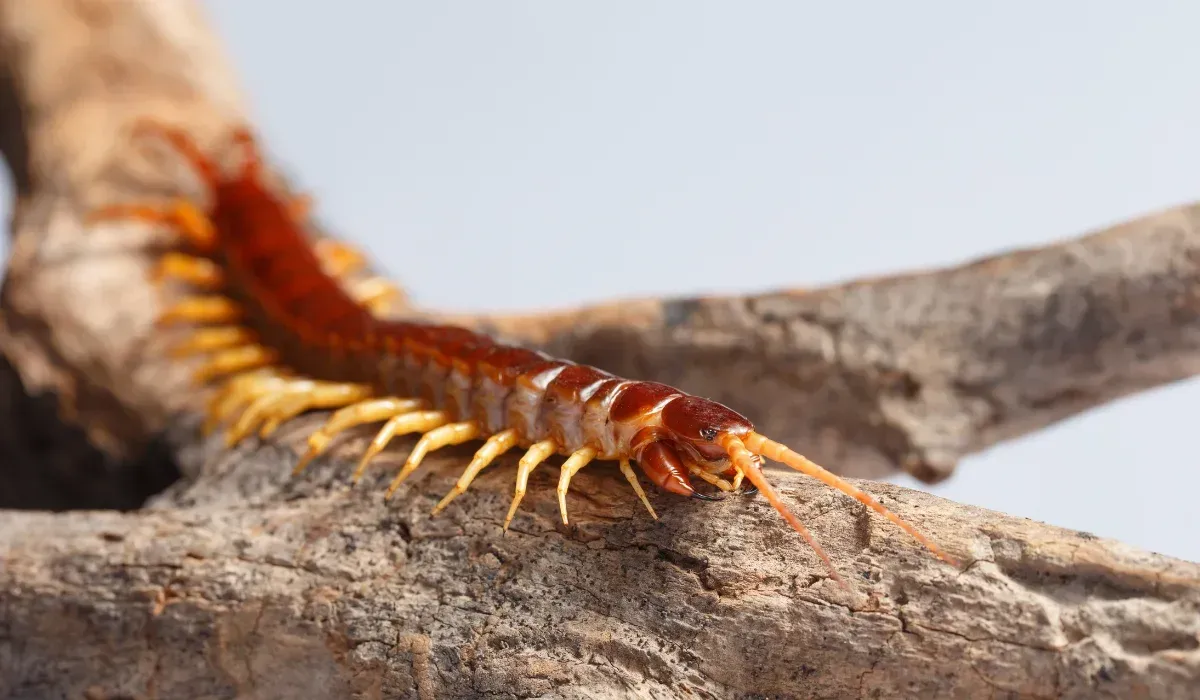
You move a patio stone or piece of firewood and a long, dark centipede with a reddish head darts across the ground. If you searched red centipede Texas after seeing one, the animal you are trying to identify is often the giant redheaded centipede, one of the largest centipedes found in the United States.
This Texas centipede can sting and inject venom, but most human reactions stay near the sting site. Knowing what it looks like, where it hides, and why it appears around a house can help you decide whether you are looking at a normal outdoor visitor or a pest problem that needs more attention.
How to Identify a Red Centipede in Texas
A Texas redheaded centipede has a thick, flattened body that looks very different from the delicate house centipedes you may see racing across a bathroom floor. The head is often red, orange, or rusty brown, while the trunk is usually darker. Its legs extend clearly from both sides of the body.
Size is another useful clue. The National Park Service identifies the giant redheaded centipede as the largest centipede species in the United States and reports that large individuals can reach about 8 inches in the wild.
Color alone is not enough for a confident Texas centipede identification. Look at the body shape and leg arrangement too. Centipedes have one pair of legs per body segment, while millipedes have two pairs on most visible segments.
| Feature | Giant Redheaded Centipede | House Centipede | Millipede |
|---|---|---|---|
| Body shape | Broad and flattened | Slender and delicate | Rounded or cylindrical |
| Typical appearance | Red or orange head with darker trunk | Tan or gray with darker markings | Often brown, black, or reddish |
| Legs | One pair per body segment | One pair per body segment | Two pairs on most body segments |
| Movement | Fast | Extremely fast | Usually slow |
| Size | Can reach several inches | Usually much smaller | Depends on species |
| Venomous sting | Yes | Yes | No |
House Centipede vs. Redheaded Centipede
A house centipede looks almost feathery because its legs are extremely long in proportion to its body. The giant redheaded centipede looks heavier and more solid, with a thicker trunk and shorter-looking legs.
You are also more likely to associate house centipedes with indoor walls, floors, and basements. A large redheaded centipede is primarily an outdoor animal, so finding one under landscaping material or wood is far less unusual than finding one established in a living space.
Where Do Texas Redheaded Centipedes Live?
Redheaded centipedes spend much of the day out of sight. They need sheltered places that help protect them from heat and moisture loss, so you are more likely to uncover one beneath an object than see one sitting in full sun.
Texas A&M notes that centipedes favor moist habitats, hide under rocks, logs, and other ground-level objects during the day, and become active at night. Those habits fit plenty of ordinary Central Texas landscapes.
Around Austin and San Antonio homes, shaded stone borders, damp leaves, boards, landscape timbers, and firewood stored on the ground can provide the cover a giant centipede in Texas needs. Those same areas can also shelter the insects and spiders centipedes hunt.
What an Indoor Sighting Means
A Texas redheaded centipede under an outdoor rock is using normal habitat. That sighting alone does not mean centipedes are breeding inside your house or that you have an infestation.
A pattern of indoor sightings tells you more. Finding centipedes repeatedly in a garage, utility room, bathroom, or other enclosed area gives you a reason to check for gaps, moisture, and prey activity.
| Where You Find a Centipede | What to Check |
|---|---|
| Beneath rocks or pavers | Normal outdoor shelter |
| Under firewood | Damp ground and protected gaps |
| In thick leaf litter | Moisture, shade, and small prey |
| Near a garage door | Gaps along the bottom or sides |
| Around pipes or utilities | Openings through exterior walls |
| Repeatedly indoors | Entry routes, moisture, and other pest activity |
What Do Red Centipedes Eat?
Texas redheaded centipedes are predators. They do not feed on lumber, drywall, insulation, clothing, or food stored in your pantry.
Centipedes hunt insects, spiders, and other small animals. They use specialized front appendages near the head to hold prey and inject venom. Most hunting takes place after dark, so a centipede can live close to a home without being noticed for long periods.
This predatory behavior also explains why repeated centipede activity can be useful information. An area with abundant insects gives a hunting centipede a food source. That does not mean one centipede confirms a cockroach, ant, or spider infestation, but frequent sightings may justify checking what else is active nearby.
Conditions That Support Centipede Activity
A good hiding place can provide several things at once. Wet leaves hold moisture, block direct sunlight, and create shelter for smaller arthropods. Firewood, unused boards, pavers, and landscape materials can create similar protected spaces when they stay in contact with the soil.
These conditions matter most close to the structure. You do not need to remove every rock or plant from your yard. Concentrate on unnecessary cover, persistent dampness, and pest activity near doors, garages, and the foundation.
| Property Condition | Why It Matters |
|---|---|
| Insects and spiders | Provides prey |
| Damp soil | Helps reduce moisture loss |
| Rocks and pavers | Creates daytime shelter |
| Heavy leaf buildup | Holds moisture and shelters prey |
| Firewood on the ground | Creates dark spaces underneath |
| Exterior gaps | Can give centipedes a route indoors |
Are Texas Redheaded Centipedes Dangerous?
A Texas redheaded centipede is venomous and can sting if handled or trapped. That does not mean it actively seeks people out. Your risk goes up when you try to grab, pin, crush, or move one with bare hands.
People often call the injury a centipede bite, but the venom is delivered through modified front legs near the head rather than ordinary biting jaws. For everyday purposes, you may see both “centipede bite” and “centipede sting” used to describe the same type of encounter.
According to Poison Control's centipede sting guidance, most reactions cause localized pain, redness, and swelling. Larger centipedes can produce more painful stings than smaller species.
What to Do After a Centipede Sting
Wash the affected skin with soap and water. A cold pack wrapped in cloth can help with discomfort and swelling, and you should watch the area for changes rather than repeatedly touching or squeezing it.
Increasing redness, worsening swelling, fever, or pus can indicate infection and should be evaluated by a medical professional. Hives, dizziness, swelling around the mouth or throat, or difficulty breathing can signal an allergic reaction and need prompt medical attention.
| Symptom | What to Do |
|---|---|
| Local pain | Clean the area and monitor it |
| Mild redness or swelling | Apply a wrapped cold pack |
| Worsening redness or swelling | Contact a medical professional |
| Fever or pus | Seek medical evaluation |
| Hives or dizziness | Get prompt medical care |
| Mouth or throat swelling | Seek immediate medical help |
| Trouble breathing | Treat it as an emergency |
For individual guidance after a suspected centipede sting in the United States, Poison Control can be reached at 1-800-222-1222.
How to Keep Centipedes Out of Your Texas Home
Centipede prevention works better when you reduce shelter, moisture, prey, and entry routes instead of focusing only on the animal you happen to see. Start close to the house, where outdoor hiding places can overlap with cracks and door gaps.
Clear heavy leaf buildup from the foundation and avoid stacking firewood directly against exterior walls. Move unused boards, pots, landscape materials, and similar objects that remain on damp soil for long periods.
Then look for water. A dripping outdoor faucet, irrigation overspray, poor drainage, or a shaded low spot can keep soil damp long after the rest of the yard dries. Correcting those small moisture problems can make the area less suitable for centipedes and several other pests.
Close Entry Points Around the Structure
Check exterior doors, garage doors, utility penetrations, and visible foundation gaps. Light showing beneath a door is an easy clue that the opening is large enough for small pests to enter.
Replace damaged weather stripping and worn door sweeps. Seal accessible cracks around plumbing, cables, and other exterior penetrations where appropriate. These repairs can also reduce access for insects that become prey for centipedes.
Check for the Pests Centipedes Hunt
When centipedes keep appearing around the same section of a house, inspect that area for ants, cockroaches, spiders, silverfish, and other small arthropods. Removing a visible centipede does little if a reliable food source remains.
This is especially useful when the sightings are indoors. A damp garage corner with insects and an open door gap gives you three specific problems to correct instead of one mysterious centipede problem.
When to Get Professional Centipede Control in Central Texas
One redheaded centipede under a backyard rock usually does not require professional treatment. Repeated indoor sightings, large centipedes appearing near frequently used entrances, or ongoing activity alongside other pests give you a better reason to have the property inspected.
Professional centipede control can help when you cannot determine where the centipedes are entering or why they keep returning. A technician can inspect likely hiding areas, moisture sources, access points, and prey activity rather than treating each centipede sighting as a separate event.
EcoForce Pest Management serves homes and businesses throughout the Austin and San Antonio metro areas. If redheaded centipedes keep appearing inside or close to your home,
contact EcoForce Pest Management to schedule an inspection and find out what conditions are supporting the activity.
Start Being Pest Free Today!
Contact Us