
Scorpion Repellents That Help and the Sprays That Do Not
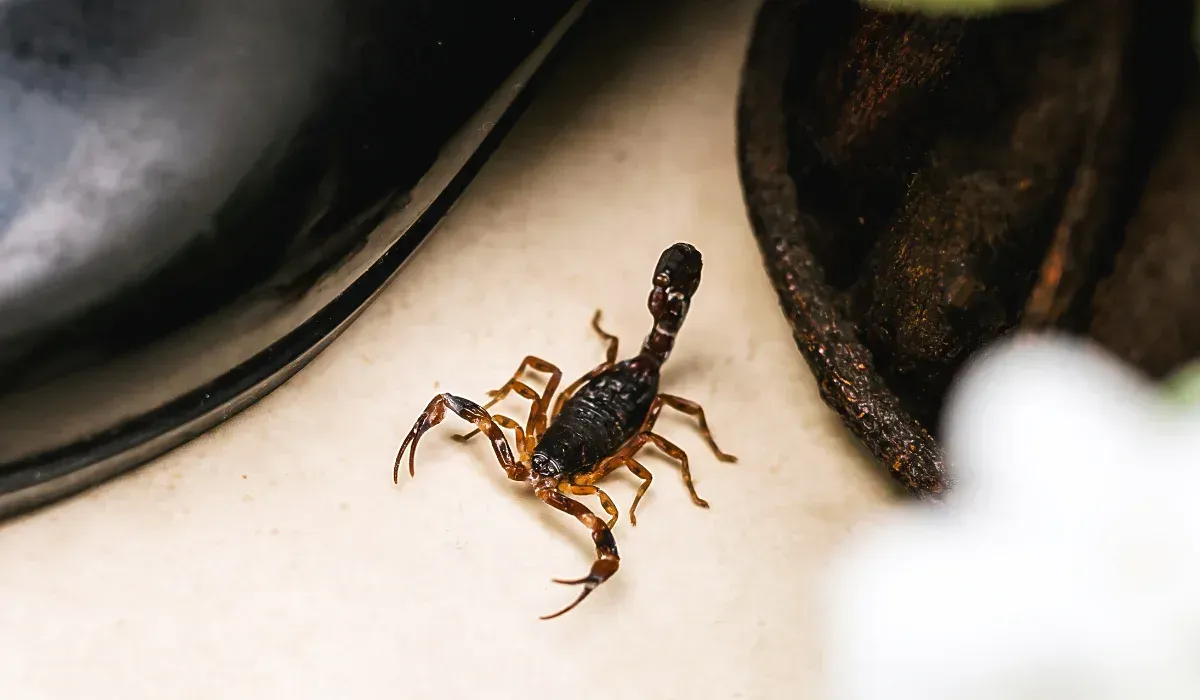
You spot a scorpion moving along the bathroom baseboard or near the garage door. Before you can grab a container, it slips into a gap that looked too narrow to hide anything. A scorpion repellent may help around certain entry routes, but no spray can make up for a damaged door seal, open wall gap, or sheltered hiding place.
This guide explains what repels scorpions, which products have credible support, and why many common sprays fall short. You will also learn how to keep scorpions out of your house by addressing the conditions that bring them close to Austin and San Antonio homes.
What Scorpion Repellent Really Means
A scorpion repellent is meant to change the animal’s direction. When a scorpion reaches a treated surface, it may turn away rather than cross it. That response can be useful near a garage threshold, doorway, plumbing opening, or another confirmed travel route.
Repellency does not mean the scorpion has left the property. It may move along a wall until it reaches an untreated gap. It may also wait beneath siding, stone, lumber, or stored materials until the application loses strength.
Direct-contact sprays work differently. They need to reach the scorpion’s body in enough quantity to have an effect. Spraying the middle of a room after the animal disappears behind a baseboard is unlikely to reach it.
Residual treatments stay on selected surfaces after application. Their performance depends on placement, surface material, sunlight, moisture, dust, cleaning, and time. A protected concrete joint and a sun-heated limestone wall will not hold the same treatment equally well.
| Method | What It Can Do | What It Cannot Do |
|---|---|---|
| Repellent formulation | Encourage a scorpion to avoid a treated route | Guarantee that it leaves the property |
| Direct-contact scorpion spray | Affect a visible scorpion when applied correctly | Reach animals hidden inside cracks or walls |
| Residual treatment | Remain on selected surfaces for a limited period | Perform equally well on every material |
| Natural scorpion repellent spray | Create odor and possible short-term avoidance | Provide verified structural protection by itself |
| Gap sealing | Physically block an entry route | Remove a scorpion already indoors |
| Sticky monitoring board | Show where indoor activity is occurring | Prevent new entry on its own |
Which Scorpion Repellents May Help?
Homeowners searching for the best scorpion repellent often find lists that group peppermint, cedar, citrus, ultrasonic devices, and coconut-based products together. The evidence is not equal. Some materials have direct scorpion-specific research, while others rely mainly on product claims or personal reports.
A scorpion repellent for home use should be judged by more than its smell. The formula, concentration, surface, placement, and exposure to weather all influence the result.
Coconut Fatty Acid Formulations
Researchers featured by New Mexico State University found that scorpions were sensitive to formulated coconut fatty acid materials. The university reported that aged residues retained repellent potential for at least one week under the conditions used in the research.
That finding is promising, but it does not mean plain coconut oil will repel scorpions. Research formulations contain selected components at controlled concentrations. Results may also change with the application rate, surface type, sunlight, rain, and product directions.
A properly formulated product may support scorpion prevention near verified travel routes. It still needs to be paired with repairs. No repellent can close a worn garage seal or fill a utility opening.
Peppermint, Cedar, and Other Scented Sprays
Peppermint oil is one of the most common answers to the question of how to repel scorpions naturally. Its strong odor may cause brief avoidance while an application is fresh. Reliable field evidence showing that homemade peppermint mixtures provide lasting protection remains limited.
Cedar, lavender, cinnamon, and citrus products face the same basic issue. Commercial formulas vary, and household mixtures are not tested in the same way. A recipe that smells strong in a spray bottle may behave differently on brick, wood, stone, or concrete.
Central Texas weather can shorten the useful life of scented applications. Direct sun heats patios and exterior walls. Rain, irrigation, dust, and porous materials can weaken or absorb the liquid. A noticeable scent does not prove that a natural scorpion repellent is still changing the animal’s behavior.
| Repellent Option | Research Support | Possible Use | Main Limitation |
|---|---|---|---|
| Formulated coconut fatty acids | Promising scorpion-specific findings | Supplemental use near selected travel routes | Results do not apply to plain coconut oil |
| Peppermint oil | Limited household evidence | Possible short-term avoidance | Outdoor applications fade quickly |
| Cedar-based formula | Depends on the exact product | Limited spot use as directed | Formulations vary widely |
| Citrus, lavender, or cinnamon mixture | Little scorpion-specific field evidence | Temporary scent-based use | Weak support for lasting prevention |
| Ultrasonic plug-in device | Little reliable field support | No dependable primary role | Walls and furniture can affect coverage |
Why Many Scorpion Sprays Fall Short
A scorpion spray can only work where it is placed and where the animal makes contact with it. Scorpions spend much of the day inside protected spaces, including wall gaps, cracks, attics, garages, stonework, and piles of outdoor materials. Treating an open floor may leave the actual hiding place untouched.
The University of California Statewide Integrated Pest Management Program explains that scorpions hide in cracks and crevices during daylight hours. Its guidance also identifies foundation cracks, poorly sealed doors, plumbing openings, unscreened vents, and window gaps as common entry routes.
Broad applications often miss those narrow spaces. Scorpions tend to follow edges and sheltered paths rather than cross every open section of a room or yard. Placement matters more than covering the largest possible surface.
Direct-Contact Sprays Address One Sighting
A direct-contact scorpion spray may affect a visible animal when the spray reaches it. That can resolve the immediate encounter, but it does not explain where the scorpion entered or what attracted it to the building.
Repeated sightings in one area deserve closer inspection. Scorpions in the house near the same cabinet, garage corner, closet wall, or patio door may be using a nearby opening. Treating each one after it appears leaves that route available.
Outdoor Applications Lose Strength
Outdoor treatments face heat, sunlight, rain, irrigation, dust, and routine cleaning. Porous materials may absorb an application unevenly. Exposed walls may receive hours of direct sun, while protected joints remain shaded.
Using more product than directed does not correct weak placement. It also does not help homeowners get rid of scorpions that remain sheltered in untreated spaces. Product directions should determine the amount, location, and timing.
| Common Mistake | Why It Falls Short | More Useful Response |
|---|---|---|
| Spraying the room where a scorpion appeared | The sighting point may not be the entry route | Inspect doors, pipes, trim, and wall edges |
| Treating only the ground-level foundation | Scorpions can climb textured walls and use elevated gaps | Check vents, stonework, ledges, and rooflines |
| Judging results by smell | Odor does not measure avoidance | Track sightings and monitoring-board activity |
| Applying extra product | More material does not fix poor placement | Follow directions and treat relevant routes |
| Leaving firewood beside the home | Stored materials provide shelter | Move firewood away from exterior walls |
| Ignoring crickets and cockroaches | Scorpions remain where prey is available | Reduce prey activity around the structure |
Why Scorpions Enter Central Texas Homes
Texas has 18 recorded scorpion species, although most occur only in certain parts of the state. The striped bark scorpion is the species homeowners encounter most widely. Adults are commonly about 2 1/2 inches long and usually have a tan body with two darker stripes.
The Texas A&M AgriLife guide to Texas scorpions reports that this species occurs in every region of Texas. Its broad range helps explain why residents encounter it in both the Austin and San Antonio areas.
Scorpions are active mainly at night. During daylight hours, they settle into cool, tight spaces beneath rocks, bark, boards, landscape materials, firewood, and stored objects. Garages, attics, closets, and crowded storage areas can offer similar shelter indoors.
Entry Points Around the House
Scorpions can use narrow gaps beneath doors, around window frames, beside utility lines, and inside foundation joints. Worn weather stripping may leave enough room even when a door looks closed. Garage doors often develop gaps at the corners or where the bottom seal meets an uneven floor.
Limestone features and stone veneer create more protected travel areas. Openings near vents, flashing, trim, and roof ledges also deserve attention because scorpions can climb rough surfaces. A treatment placed only around the bottom of the foundation may miss the route they are using.
A quick nighttime check can uncover obvious problems. Turn off the indoor lights and look for exterior light around closed doors. Visible light beneath or beside the frame signals a gap that should be repaired.
Shelter, Moisture, and Prey
Scorpions hunt crickets, cockroaches, spiders, centipedes, and other small creatures. A steady prey population gives them a reason to remain close to the building. Outdoor lights, pet food, damp debris, and dense landscaping can support that activity.
A leaking faucet, overwatered planter, misdirected sprinkler, or damp utility area may create a busier zone beside the foundation. Fixing those conditions removes part of the food chain and supports long-term scorpion control.
Firewood, cardboard, lumber, unused pots, and construction scraps provide daytime cover. When those materials rest against an exterior wall, scorpions can move from shelter to an opening without crossing much exposed ground.
How to Keep Scorpions Out of Your House
Effective scorpion prevention begins with the building. Install tight door sweeps, replace worn weather stripping, screen vents, and close openings around plumbing or cable lines. Repair cracked mortar, loose trim, and visible joints where exterior materials meet.
Move firewood, cardboard, stacked lumber, pots, and unused materials away from the home. Keep stored objects elevated when practical, and wear gloves before moving anything that has been sitting outside. Never place your hands beneath rocks, boards, or boxes without checking first.
Trim plants that touch the roof or exterior walls. Thin deep mulch next to the foundation and correct irrigation that keeps the area wet. These changes expose hiding places and make travel around the structure less protected.
Inspect After Dark
Scorpions fluoresce under ultraviolet light, so nighttime inspection is more productive than a daytime search. Check patios, foundation edges, stonework, retaining walls, garages, fences, and storage areas. Wear closed shoes and keep your hands out of cracks.
Record each location instead of relying on memory. Several sightings along one wall or near the same door may reveal a consistent route. That information can guide repairs and targeted scorpion control.
Use Monitoring Boards Indoors
Place sticky monitoring boards along walls, behind furniture, inside closets, and near suspected openings. Scorpions often move close to edges, so a board placed in the middle of a room may provide little useful information. Keep every board away from children and pets.
Monitoring can show whether a repair worked. Fewer captures after replacing a garage seal or closing a utility gap suggest that the change helped. Continued activity means another opening or hiding place may remain.
Choosing the Best Scorpion Control Plan for Your Home
The best scorpion repellent is the one used for the right purpose and in the right location. Formulated coconut fatty acids have promising research behind them. Peppermint, cedar, and other scented products may offer temporary support, but their performance is less predictable.
Long-term scorpion control requires more than a spray. Structural repairs block access. Yard changes reduce shelter. Moisture correction and prey management make the property less attractive. Monitoring shows whether the plan is working.
EcoForce Pest Management gives Texas homeowners a property-specific alternative to repeated store-bought spraying. A trained technician can inspect likely entry points, identify sheltered activity areas, check the conditions supporting scorpion prey, and recommend service based on the construction and surroundings of your home.
Contact EcoForce Pest Management to request a free estimate. Professional service can replace guesswork with a clear scorpion repellent and prevention plan built around the routes, shelter, and food sources on your property.
Start Being Pest Free Today!
Contact Us