
Tree Roaches in Texas Fly Straight for Your Porch Light
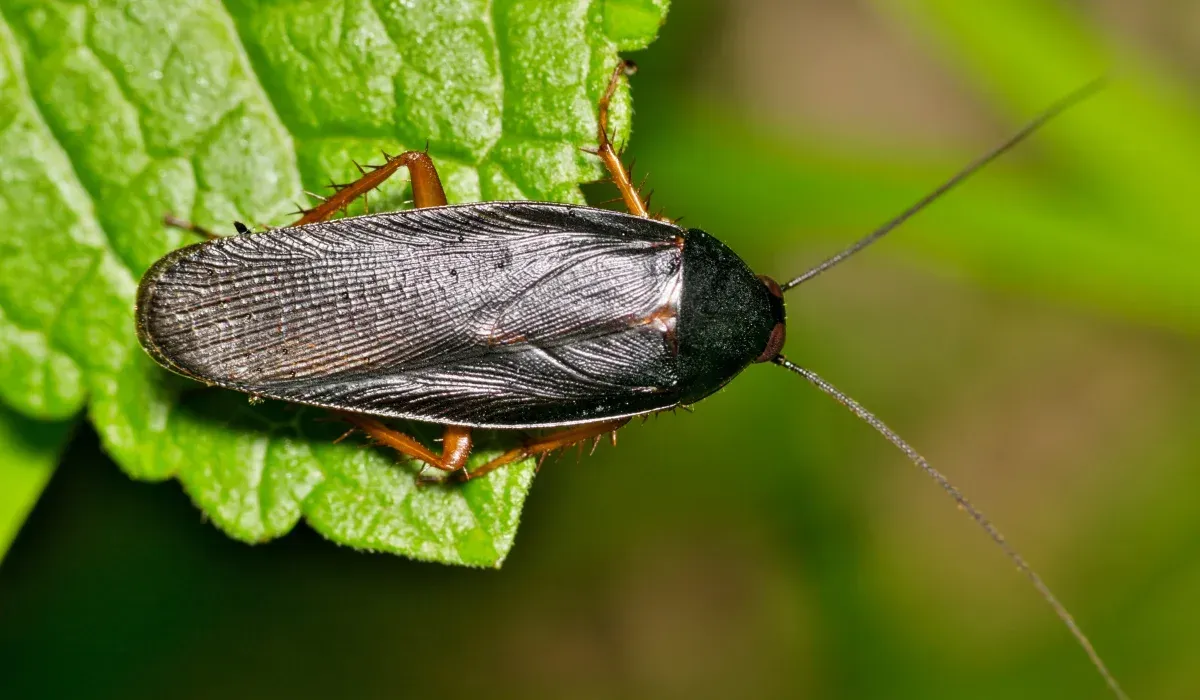
You step onto the porch after dark, and a large brown roach cuts across the light beside your head. It hits the siding, drops near the door, and disappears before you can get a closer look. Tree roaches in Texas often show up this way because some large outdoor cockroaches fly at night and gather near illuminated doors, windows, and rooflines.
The roach is not chasing you. It likely came from a nearby tree, mulch bed, gutter, or other damp hiding place. This guide explains why flying roaches in Texas gather near porch lights, how to identify the most likely species, where they hide, and how to keep them outside.
What Texans Mean by “Tree Roach”
“Tree roach” is a common Texas nickname, not the official name of one cockroach. Homeowners often use it for a large, dark roach found on a tree trunk, exterior wall, patio, or porch. Smokybrown cockroaches are common candidates, while American cockroaches may receive the same name.
The distinction matters once a roach enters your house. Smokybrown and American cockroaches usually live outdoors, but both can remain inside when they find moisture and shelter. German cockroaches behave differently because they live and reproduce indoors, often around kitchens, bathrooms, appliances, and food storage.
How Common Texas Cockroaches Compare
The Texas A&M AgriLife Extension identifies smokybrown, American, and German cockroaches among the species commonly found around Texas properties. Size, color, markings, and location provide better clues than the nickname alone.
| Feature | Smokybrown Cockroach | American Cockroach | German Cockroach |
|---|---|---|---|
| Typical adult length | About 1 1/4 to 1 1/2 inches | About 1 1/2 to 2 inches | About 1/2 to 5/8 inch |
| Main color | Uniform dark brown or mahogany | Reddish brown | Tan to light brown |
| Marking behind the head | Even dark coloring | Pale tan or yellow border | Two dark parallel stripes |
| Flight behavior | Adults fly well | Adults can fly | Adults have wings but rarely fly |
| Common outdoor locations | Tree holes, mulch, ground cover, soffits, and gutters | Sewers, drains, crawl spaces, and damp outdoor areas | Rarely established outdoors in Texas |
| Common indoor locations | Attics, garages, and humid structural spaces | Utility rooms, crawl spaces, and commercial buildings | Kitchens, bathrooms, cabinets, and appliances |
A smokybrown cockroach usually has an even mahogany color from its head to the end of its wings. An American cockroach is larger and has a pale marking behind its head. A small tan roach with two dark stripes is more likely a German cockroach, even when you find it near an exterior door.
Why Tree Roaches in Texas Fly Toward Porch Lights
Smokybrown cockroaches leave their daytime shelter after dark. An adult may fly from a tree, fence, roof edge, or exterior wall toward the brightest visible area. Its flight path can shift suddenly, so the roach may appear to head straight for you when you are standing between it and the fixture.
The University of Florida smokybrown cockroach profile describes adults as good fliers that are attracted to light. The same source places their length at about 25 to 32 millimeters, or roughly 1 to 1 1/4 inches.
How Porch Lights Lead to Indoor Sightings
Cockroaches attracted to porch lights often land beside the easiest openings into a home. A fixture next to the front door brings them close to the threshold, frame, and weatherstripping. Once you open the door, the roach has only a few feet to crawl or fly indoors.
Lights mounted under the eaves can create another entry route. They draw outdoor cockroaches toward soffit vents, fascia gaps, and roof joints that homeowners rarely inspect from the ground.
| What Happens Outside | Why It Matters | Possible Result |
|---|---|---|
| A roach circles a fixture beside the door | It lands close to the frame or threshold | It enters when the door opens |
| Indoor light shines through a torn screen | The opening remains visible from outside | The roach crawls through the damaged area |
| A porch light sits beneath a loose soffit | The fixture draws activity toward the roofline | Roaches reach the attic |
| Exterior lights remain on all night | Roaches have more time to gather near the structure | Sightings continue around doors and windows |
Turning off an unused fixture may reduce activity in one spot, but lighting is not the only cause. A wet gutter, loose vent screen, or mulch bed against the wall can continue supporting roaches even when the porch stays dark.
Where Outdoor Cockroaches Hide Around Texas Homes
A flying cockroach usually starts the evening close to the house. Smokybrown cockroaches favor warm, humid shelter with limited airflow. Tree holes provide those conditions, but Texas yards offer many other places to hide.
Roaches may settle beneath live oak bark, inside leaf piles, under planters, or between landscape timbers. Irrigation can keep these areas damp long after nearby concrete has dried. Thick shade also slows evaporation and protects roaches during the hottest part of the day.
Mulch, Leaves, and Stored Materials
Deep mulch creates protected spaces close to the soil. When it touches siding or covers the edge of the slab, a roach can move toward a wall opening without crossing much exposed ground.
Firewood, cardboard, spare lumber, and unused pots create similar conditions. A stack beside the garage wall gives roaches shelter within a short distance of the door seal, siding gaps, or utility openings.
Gutters, Soffits, and Attics
Leaves trapped in a gutter hold water and decaying plant material above the ground. From there, a roach can travel behind a loose fascia board or pass through damaged screening on an attic vent.
An attic with a roof leak or condensation problem offers warmth, darkness, and moisture. Boxes and stored belongings add cover, which can make the source difficult to find from the attic entrance.
| Property Condition | What It Provides | Useful Correction |
|---|---|---|
| Leaves packed into gutters | Moisture and shelter beside the roof | Clear debris and check downspout drainage |
| Mulch touching the foundation | A shaded route toward wall openings | Leave a visible gap beside the structure |
| Firewood stacked against a wall | Damp shelter near the garage or siding | Store wood off the ground and away from the house |
| Sprinklers striking siding | Regular moisture along the foundation | Redirect the spray pattern |
| Thick plants covering the wall edge | Shade and concealed movement | Trim enough growth to inspect the perimeter |
| Damaged soffit or vent screening | Direct attic access | Repair the opening without blocking airflow |
You do not need to remove every tree or strip the yard bare. Focus on the narrow zone where landscaping meets the building. That is where moisture, hiding places, and entry points are most likely to overlap.
Does One Tree Roach Mean You Have an Infestation?
One adult beside the porch door may have flown from the yard a few minutes earlier. Remove it, inspect the nearest opening, and watch the area over the next several nights. A single sighting offers little proof that roaches are breeding indoors.
Young roaches tell a different story. Nymphs cannot fly from a tree into your attic. Several nymphs in one room, egg cases attached to stored items, or steady sticky-trap captures indicate activity nearby.
Accidental Visitor or Indoor Activity?
Location helps you read the signs. One adult inside the front door after an evening delivery suggests accidental entry. Adults appearing near the attic hatch every week point toward a roofline opening or a hidden harborage above the living space.
Small tan roaches near the sink or stove require faster action. Those signs fit German cockroaches rather than an occasional outdoor species, and their populations can grow quickly indoors.
| What You Find | What It Suggests | What to Do Next |
|---|---|---|
| One adult beside an exterior door | Recent outdoor entry | Check the sweep, frame, and nearby screen |
| One adult in the garage after moving boxes | Entry with stored items or through the garage seal | Inspect boxes and the bottom door gasket |
| Adults repeatedly found near the attic hatch | Roofline entry or attic activity | Inspect vents, soffits, gutters, and stored materials |
| Several nymphs in one area | Reproduction nearby | Schedule a detailed inspection |
| Small tan roaches near a sink or stove | Possible German cockroach activity | Treat it as an indoor infestation |
| Egg cases or steady trap captures | Continuing activity | Identify the species and locate the source |
Sticky traps can confirm a pattern. Set them flush against walls near the garage entrance, attic access, laundry appliances, and exterior doors. Number each trap and record the captures for several nights so you can see where activity is concentrated.
How to Get Rid of Tree Roaches and Keep Them Outside
The best cockroach prevention steps begin outside, close to the building. Clear leaves from gutters and patio edges. Move firewood, cardboard, and unused containers away from exterior walls. Correct hose leaks, irrigation overspray, and drainage that keeps soil wet beside the slab.
Next, inspect the house from the threshold to the roof. Replace a worn door sweep if you can see daylight beneath the door. Repair torn screens, gaps around utility lines, loose trim, and damaged vent covers. Keep weep holes and required attic ventilation open instead of filling every gap with sealant.
Change How the Porch Is Lit
Turn off decorative lights when no one needs them. Where the layout allows, place a useful light away from the door so flying insects gather several feet from the entrance instead of directly above it.
Close curtains when bright interior light shines through an open window or damaged screen. Lighting changes will not remove a nearby harborage, but they can reduce the number of insects gathering around a doorway.
Use Monitoring to Find the Entry Route
Place sticky traps along wall edges rather than in the middle of a room. Check the garage, laundry area, attic entrance, and rooms below roofline openings. A cluster of captures in one location can point you toward a specific door, wall penetration, or upper vent.
Avoid spraying random surfaces simply because a roach crossed them. Outdoor cockroaches may travel far from their shelter. Finding the route and moisture source gives you a better result than chasing each adult through the house.
Know When Professional Cockroach Control Makes Sense
DIY repairs may stop an occasional visitor, but recurring activity often means the source has not been found. Roaches may be entering through an attic vent, living near a wet gutter, or moving from landscaping into a garage wall.
Professional cockroach control in Texas should begin with identification and inspection. Smokybrown cockroaches near the roofline require a different plan from German cockroaches breeding near kitchen appliances. Treating both problems the same way can leave the real source untouched.
Keep Tree Roaches Outside With the Right Inspection
Tree roaches reach porches because nighttime flight, outdoor shelter, and building openings bring them close to the home. You can reduce many sightings by removing damp debris, correcting leaks, repairing screens, and checking the roofline as carefully as the front door.
Recurring tree roaches in Texas deserve more than a quick spray around the threshold. EcoForce Pest Management serves homes and businesses. Our technicians identify the cockroach, inspect likely entry routes from the foundation to the roof, and focus service on the conditions supporting the activity.
That process matters because a flying outdoor roach calls for a different response from German cockroaches breeding indoors.
Contact EcoForce Pest Management for a free estimate when large roaches keep appearing on your porch, in your attic, or inside your home.
Start Being Pest Free Today!
Contact Us