
Why Crickets Invade Austin Homes Every Fall
Crickets become much more noticeable around Austin homes in late summer and fall. You may see dark insects gathering near the garage, hopping across the patio, or slipping beneath an exterior door. Once one gets inside, its nighttime chirping can make it seem much more serious than it is.
The cricket bug most Austin homeowners encounter during this period is usually a field cricket. These insects live outdoors and normally enter homes by accident. Their seasonal development, nighttime movement, attraction to exterior lighting, and access to small structural gaps all contribute to the fall increase.
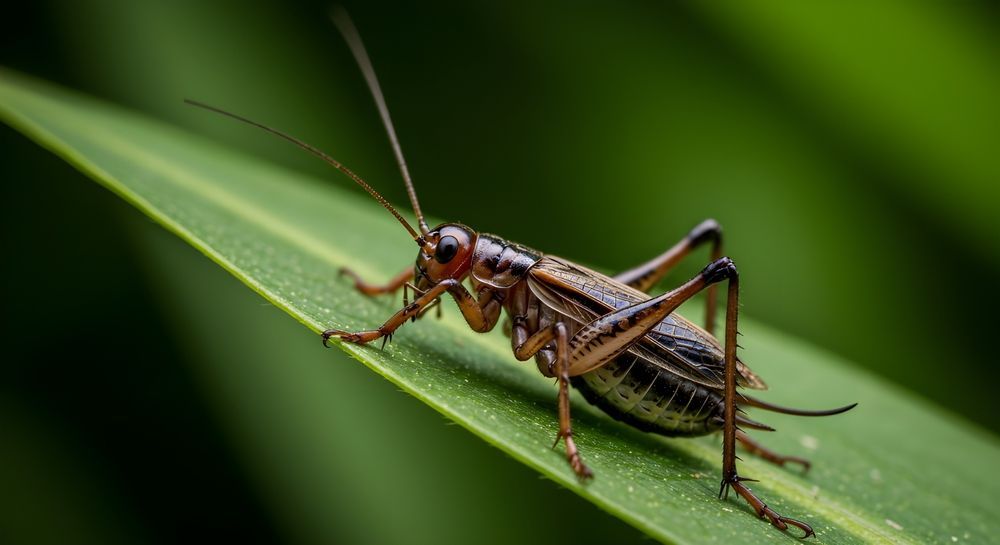
Is a Cricket Bug Different From a Cricket?
“Cricket bug” is an informal phrase people use when searching for information about crickets. It does not refer to a separate species.
The crickets commonly seen around Central Texas buildings in fall are usually field crickets. They may be black, dark brown, or reddish-brown, depending on the species and stage of development. Adults are often close to an inch long and have long antennae, powerful back legs, and wings folded over the body.
House crickets are a different species. They are usually lighter in color and can survive and reproduce inside warm buildings. Field crickets, by comparison, are primarily outdoor insects. Most that enter an Austin home will not establish a permanent indoor population.
Common field cricket features include:
- A dark brown or black body
- Antennae that may be longer than the body
- Large hind legs adapted for jumping
- Wings on mature adults
- Rapid movement along floors and walls
- A long, needle-shaped egg-laying structure on adult females
The prominent structure on a female cricket’s abdomen is an ovipositor, not a stinger. Crickets do not use it to defend themselves or harm people.
Why Cricket Activity Peaks Every Fall
Fall cricket activity begins months before homeowners notice insects gathering around their doors.
Field cricket eggs typically remain in the soil through winter and hatch when conditions become favorable in spring. Young crickets spend the following months feeding and developing. By late summer or early fall, large numbers may reach adulthood around the same time.
Adults then become more active as they search for mates and suitable places to lay eggs. Their increased movement makes them more visible around homes, stores, parking lots, and other developed areas.
The timing can vary from year to year. Weather affects survival, development, and activity. Some fall seasons bring scattered sightings, while others produce large groups in certain neighborhoods.
The Texas A&M AgriLife guidance on fall cricket activity explains that adult field crickets become especially abundant around Texas buildings during late summer and fall. The resource also notes that numbers can be particularly high when dry spring and summer conditions are followed by rain and cooler weather.
Cooler Weather Gets Crickets Moving
Austin’s first cooler nights do not necessarily drive crickets indoors because they want to live with people. The change in weather increases their activity at a time when many crickets have already reached adulthood.
During the hottest part of the day, crickets often remain in protected outdoor locations. They become more active after sunset and during cooler periods. Fall weather gives them more opportunities to move across lawns, sidewalks, driveways, and areas around buildings.
A cool front may therefore make it look as though the cricket population appeared overnight. The insects were often already developing nearby but were less visible before reaching adulthood and becoming more active.
Exterior Lights Pull Crickets Toward Austin Homes
Outdoor lighting is one of the strongest reasons crickets gather around a particular building. Bright porch lights, garage fixtures, security floodlights, and illuminated windows can attract insects from the surrounding area.
Crickets that gather beneath a light are already close to potential entry points. An open door, damaged screen, or gap beneath the garage door may be all they need to move inside.
Lighting helps explain why one house may have dozens of crickets around the entrance while a nearby property has relatively few. The home with brighter or longer-running lights may simply be drawing insects from a larger area.
Businesses can experience the same problem on a larger scale. Gas stations, shopping centers, offices, and apartment buildings often keep bright lights on throughout the night. During a seasonal surge, crickets can collect around walls, sidewalks, doors, and parking areas.
To reduce attraction:
- Turn off unnecessary exterior lights.
- Use motion sensors where constant lighting is not required.
- Close blinds or curtains near brightly lit windows.
- Move decorative lighting away from entrances.
- Direct security lights toward the intended area rather than across the yard.
- Consider bulbs designed to attract fewer insects.
Lighting changes will not remove crickets already inside, but they can reduce the number arriving near the structure.
How Crickets Get Inside
A cricket does not need a large opening to enter a home. The same gaps that admit ants, beetles, spiders, and other pests may also provide access to crickets.
Common entry points include:
- Gaps beneath exterior doors
- Worn garage-door seals
- Torn window or vent screens
- Cracks along the foundation
- Openings around air-conditioning lines
- Utility and plumbing penetrations
- Unsealed expansion joints
- Doors left open during the evening
Attached garages are frequent entry areas. Crickets may gather near garage lights, slip beneath the main door, and later move through the door connecting the garage to the house.
Inspecting the property after dark can make these weak points easier to find. Turn on the interior lights and look from outside for light showing through gaps around doors, windows, and utility openings.
Are Crickets Coming Inside for Warmth?
Crickets may enter protected areas as outdoor conditions change, but fall field crickets are usually accidental invaders rather than insects deliberately establishing a winter home.
They are drawn close to buildings by lights and nighttime activity. Once near the structure, they wander through available openings. A garage, utility room, or ground-floor doorway may provide temporary shelter, but most field crickets do not reproduce successfully inside homes.
This distinction matters because seeing several crickets indoors does not always indicate an indoor breeding site. It may indicate that many adults are active outside and the home has an accessible entry point.
Sealing that entry point can be more useful than repeatedly removing individual insects.
Why Crickets Hide in Garages and Ground-Level Rooms
Crickets spend much of their time close to the ground. Once indoors, they move beneath and behind objects where they are protected from activity and light.
Common hiding places include:
- Behind stored boxes
- Beneath garage shelving
- Around water heaters
- Under appliances
- Inside laundry rooms
- Along baseboards
- Beneath furniture
- Inside closets near exterior walls
- Around utility pipes
Clutter gives them more places to remain unnoticed. Cardboard boxes, bags, tarps, gardening supplies, and seasonal decorations stored directly on the garage floor can create convenient shelter.
Crickets may also move toward damp areas, although moisture is not always the reason they entered. Plumbing leaks, condensation, and poorly ventilated storage spaces can make an indoor location more suitable once a cricket is already inside.
Why Male Crickets Chirp at Night
The persistent sound coming from behind an appliance or storage cabinet is usually produced by a male cricket. He creates the sound by rubbing specialized parts of his wings together.
The chirping is primarily used to attract females. Different species produce different calls, and the speed of the chirping can change with temperature.
Crickets are generally more active at night, when a home is quieter and their calls are easier to notice. One insect in a garage or wall-adjacent room can produce enough sound to interrupt sleep.
Following the noise may help locate the general area, but crickets often stop chirping when they sense movement. Sticky monitoring traps placed along walls can help identify travel routes when the cricket cannot be found directly.
Does One Cricket Mean You Have an Infestation?
One cricket usually means that an outdoor insect found its way inside. This is especially likely during Austin’s seasonal fall activity.
Several crickets appearing over multiple nights may still be coming from outside. Check the locations where they are found. Repeated sightings near the same door, garage wall, or utility opening can reveal an access point.
Signs that deserve a closer inspection include:
- Crickets appearing in several rooms
- Repeated sightings outside the fall activity period
- Numerous crickets trapped indoors
- Persistent chirping from multiple locations
- Damage to stored paper or fabric
- Large accumulations around exterior doors
- Dead crickets collecting in hidden areas
Field crickets generally do not create permanent indoor infestations. However, large numbers can become a sanitation and nuisance problem, particularly when dead insects collect beneath appliances or behind stored materials.
Are Crickets Dangerous?
Field crickets do not sting and are not considered dangerous household pests. Their sudden jumping and large numbers can be startling, but they generally try to escape rather than approach people.
The main indoor concerns are noise, mess, and occasional damage. Crickets may feed on organic debris and can damage certain materials, particularly when those materials contain food residue, perspiration, or other substances that attract them.
Possible problems include:
- Nighttime chirping
- Droppings on floors or stored items
- Stains caused by crushed insects
- Odors from dead crickets
- Minor damage to paper or soiled fabric
- Attraction of spiders and other predators
Crickets can also become an indirect sign of an exclusion problem. A gap large enough for crickets may admit cockroaches, spiders, and other pests throughout the year.
Why Dead Crickets Can Create a Strong Odor
A few dead crickets may go unnoticed. A large seasonal accumulation can produce a distinct and unpleasant smell as the insects decompose.
This is especially common near brightly lit commercial buildings, but it can also happen in garages, wall edges, window wells, and other protected areas around homes.
Remove dead crickets promptly with a vacuum or broom. Empty the vacuum into a sealed bag and take it outside so insects or odors do not remain indoors.
Cleaning the insects addresses the immediate problem. Adjusting outdoor lights and sealing entry points helps prevent another accumulation.
How to Keep Crickets Out of Your Austin Home
The most reliable prevention plan reduces the number of crickets approaching the building and closes the openings they use.
Change Exterior Lighting
Begin with the lights closest to doors, windows, and the garage. Keep unnecessary fixtures off during the evening, especially during periods of heavy fall activity.
Motion-activated lighting can preserve visibility without drawing insects for the entire night. Fixtures that must remain on may be more effective when positioned away from doors.
Repair Door and Garage Seals
Check whether exterior doors close tightly. Replace cracked weatherstripping and add a door sweep when light is visible beneath the door.
Inspect the entire bottom edge of the garage door. A seal that appears intact in the center may leave gaps at the corners.
Seal Cracks and Utility Openings
Use an appropriate sealant around plumbing lines, electrical conduits, air-conditioning connections, and foundation joints. Repair damaged screens and cover vents without restricting necessary airflow.
Avoid sealing intentional drainage openings or building features without knowing their purpose. A pest professional can help distinguish accidental gaps from required ventilation or drainage points.
Reduce Outdoor Hiding Places
Crickets can shelter in dense vegetation, leaf litter, wood piles, mulch, and debris near the structure.
Move stored materials away from exterior walls. Trim plants that touch the house and remove heavy accumulations of dead leaves. Keep the area around exterior doors and air-conditioning equipment reasonably open for inspection.
Organize Indoor Storage
Use sealed plastic containers instead of open cardboard boxes where practical. Keep stored items elevated and leave some space between shelving and the wall.
A cleaner storage layout gives crickets fewer protected hiding places and makes new activity easier to detect.
What to Do When Crickets Are Already Inside
A vacuum is usually the simplest way to remove individual crickets. It can also collect dead insects, droppings, and debris from corners and beneath accessible furniture.
Sticky traps may help when chirping continues but the cricket remains hidden. Place them along walls and near likely entry points rather than in the middle of a room.
Avoid spraying large areas without identifying where the crickets are entering. Killing visible insects will provide temporary relief, but new crickets may continue arriving if exterior lights and structural gaps remain unchanged.
If activity is concentrated near a particular door or wall, inspect the corresponding exterior area. The source may be easier to identify outside than inside.
When Professional Cricket Control Makes Sense
Professional service may be appropriate when crickets continue entering despite basic prevention, large numbers are gathering around the property, or you cannot determine where they are getting inside.
EcoForce provides professional cricket control for Texas homes and businesses. Our process includes inspecting the property for cricket activity, hiding areas, and access points. Treatment and exclusion recommendations are then based on the conditions we find.
Austin properties can face different pest pressures as temperatures and moisture levels change throughout the year. Our Austin pest control services address residential and commercial pest problems using an integrated approach suited to the property.
Stop Fall Crickets Before They Settle In
Austin’s fall cricket activity is seasonal, but you do not have to accept constant chirping or piles of insects around the garage. Reducing exterior lighting, repairing door seals, clearing outdoor shelter, and closing structural gaps can make a noticeable difference.
When crickets continue appearing indoors or gathering around your property in large numbers, contact EcoForce Pest Management to request an inspection. We can identify the activity areas, find likely entry points, and recommend a practical cricket-control plan for your Austin home or business.
Start Being Pest Free Today!
Contact Us