
The Wolf Spider in Your Garage Is Scarier Than It is Dangerous
A large spider racing across the garage floor can make anyone stop in their tracks. In many Texas homes, that fast-moving visitor is a wolf spider. Its size, speed, and hairy appearance can be alarming, but wolf spiders generally pose little danger to people.
Unlike spiders that wait in webs, wolf spiders actively chase insects across the ground. A garage gives them shelter, hiding places, and access to the bugs they hunt. One spider does not necessarily mean you have an infestation, but repeated sightings may point to open entryways, clutter, or another pest problem that is providing food.
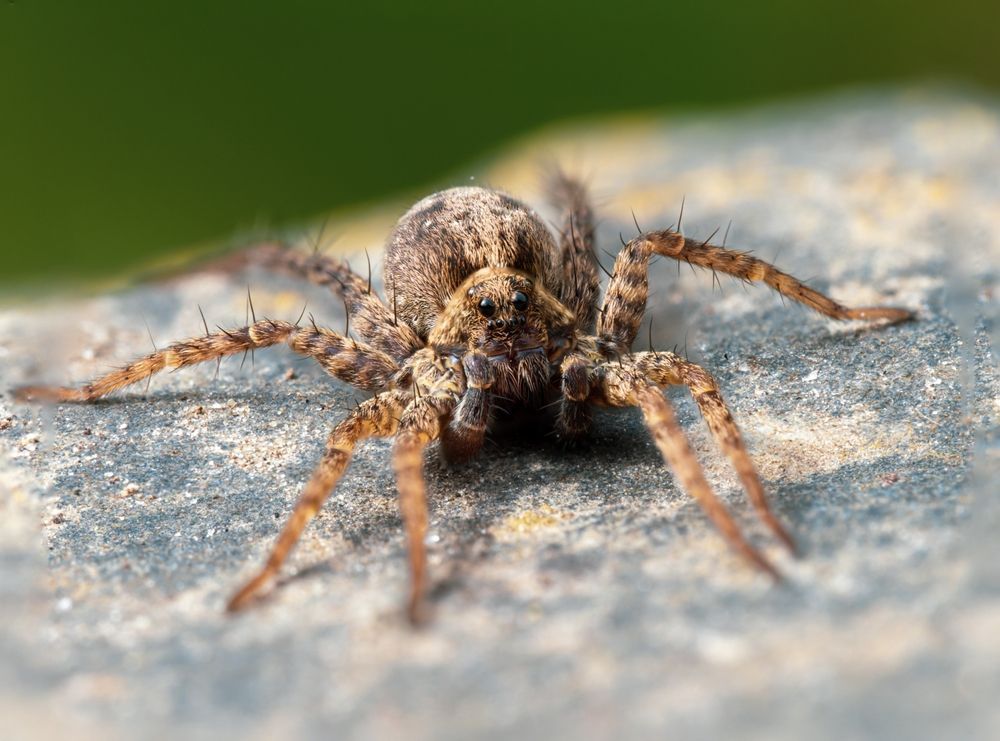
What Does a Wolf Spider Look Like?
Wolf spiders belong to the Lycosidae family, which includes many species with slightly different sizes and markings. Most are brown, gray, tan, or black, with stripes or mottled patterns that help them blend into soil, leaves, and other outdoor surfaces.
Their bodies are typically sturdy and covered with short hairs. Their legs are built for running, which explains the sudden bursts of speed that often frighten homeowners. Some Texas species can appear quite large once their legs are included, although size varies by species and age.
Common identification features include:
- A brown, gray, or dark body
- Stripes or irregular markings along the back
- A stocky, hairy appearance
- Long legs suited to running
- Movement across floors instead of sitting in a web
- Two prominent forward-facing eyes above a row of smaller eyes
The Texas A&M AgriLife guide to Texas spiders describes wolf spiders as common residents of fields and backyards with mottled brown, gray, black, yellow, or cream markings. Their camouflage can make them difficult to notice outdoors until they begin moving.
Why Wolf Spiders Wander Into Texas Garages
A wolf spider usually enters a garage while searching for food, shelter, or a protected place to rest. It is not trying to approach people or establish a web above the doorway.
Garages are especially accessible because doors remain open for extended periods. Gaps beneath garage doors, utility openings, damaged weatherstripping, and cracks around the foundation can provide additional entry points.
They Are Hunting Other Pests
Wolf spiders eat insects and other small arthropods. A garage with crickets, beetles, cockroaches, flies, or other pests can become a productive hunting area.
This is one reason simply removing the spider may not solve the larger problem. If insects remain abundant, other spiders may continue to follow them indoors.
They Have Plenty of Hiding Places
Stored boxes, tools, firewood, gardening supplies, and items left along the walls create protected spaces where spiders can remain unnoticed. Floor-level clutter is especially attractive because wolf spiders spend much of their time on the ground.
They may hide beneath:
- Cardboard boxes
- Storage bins
- Shelving units
- Lawn equipment
- Tarps and folded fabric
- Bags of soil or mulch
- Firewood
- Items that have not been moved recently
Outdoor Conditions Can Push Them Inside
Wolf spiders normally live outdoors. They can enter structures accidentally while moving through landscaping, mulch, leaf litter, grass, and foundation areas.
Changes in temperature, heavy rain, dry conditions, landscaping work, or movement of stored objects may disturb their hiding places. Open garage doors then give them a convenient path indoors.
Are Wolf Spiders Dangerous?
Wolf spiders have venom because they use it to subdue their prey. That does not mean they present the same medical concern as a black widow or brown recluse.
They are not aggressive toward people and generally try to escape when disturbed. A bite is more likely when someone attempts to pick up a spider, presses against one hidden in clothing or a glove, or traps it against the skin.
A wolf spider bite may cause localized effects such as:
- Brief pain
- Redness
- Mild swelling
- Itching or irritation
Reactions vary, and a skin mark alone cannot reliably identify which spider or insect caused it. Avoid assuming that an unexplained bump is a wolf spider bite unless the spider was seen during the incident and identified correctly.
Seek medical guidance when a suspected bite causes severe pain, spreading redness, breathing problems, significant swelling, fever, drainage, or other worsening symptoms. Children, older adults, and people with known allergic reactions may also need closer monitoring.
Wolf Spider or Brown Recluse?
Brown coloring causes many harmless spiders to be mistaken for brown recluses. Wolf spiders and brown recluses have several important differences, although homeowners should avoid handling either spider to inspect it closely.
Wolf spiders usually have patterned or striped bodies and a visibly hairy appearance. They are active hunters that may be seen running across open floors.
Brown recluses tend to have a more uniform tan or brown color, long slender legs, and a plain abdomen. The well-known violin-shaped marking can be difficult to see and should not be used as the only identification feature.
Behavior also provides a clue. A large, patterned spider sprinting across an open garage floor is more consistent with a wolf spider. Brown recluses are secretive and usually remain in quiet, undisturbed spaces.
Do not rely on color alone. Photograph the spider from a safe distance or capture it in a sealed container only when this can be done without direct contact. A pest professional can provide a more reliable identification.
Wolf Spider or Grass Spider?
Grass spiders are another common source of confusion. They often share the brown coloring and striped markings seen on wolf spiders.
The easiest clue is usually the web. Grass spiders create flat, sheet-like webs with a funnel-shaped retreat. These webs are often found near foundations, landscaping, steps, and low vegetation.
Wolf spiders hunt without prey-catching webs. They may use silk for egg sacs, shelters, or other purposes, but they do not sit inside a funnel web waiting for insects.
Grass spiders also tend to have clearly visible spinnerets extending from the rear of the abdomen. These can resemble two short tails. Wolf spiders do not have the same prominent projection.
Why You May See a Mother Carrying Spiderlings
One of the most startling wolf spider encounters happens when a female is carrying young on her back. The small spiderlings remain clustered on her abdomen after leaving the egg sac.
If the mother is disturbed or crushed, the young may scatter quickly in several directions. This can look like an indoor spider outbreak, but it does not mean hundreds of spiders have been nesting throughout the garage.
Avoid stepping on a female carrying young. Place a container over her, carefully slide a stiff piece of cardboard underneath, and release her away from the structure. Wear closed-toe shoes and avoid using bare hands.
Does One Wolf Spider Mean You Have an Infestation?
One wolf spider usually represents an individual that wandered indoors. Wolf spiders are generally solitary hunters rather than social pests that build a shared indoor nest.
Frequent sightings deserve more attention. Several spiders appearing over a short period may indicate:
- Gaps around the garage door or foundation
- Damaged weatherstripping
- Heavy insect activity
- Excessive floor-level clutter
- Outdoor harborage beside the structure
- Bright exterior lights attracting flying insects
- Moisture problems supporting other pests
Spiders often become noticeable because another pest population is already present. Reducing their food supply is an important part of long-term spider control.
What to Do When You Find a Wolf Spider
You do not need to approach or touch the spider. Give it room and keep children and pets away while you decide how to remove it.
For a single spider, you can:
- Place a wide container over it.
- Slide a piece of stiff cardboard beneath the container.
- Carry the covered container outdoors.
- Release the spider away from doors and foundations.
- Vacuum it if safe capture is not practical.
- Empty the vacuum outdoors afterward.
Do not try to pick it up with your hands. Avoid crushing it with a bare foot, especially if you cannot identify the spider or it appears to be carrying young.
Our guide to getting rid of spiders in the house provides additional steps for addressing indoor hiding places and reducing the conditions that attract spiders.
How to Keep Wolf Spiders Out of Your Garage
Prevention works best when you address both entry points and the insects wolf spiders are following.
Seal Ground-Level Openings
Inspect the bottom and sides of the garage door. Replace worn weatherstripping and repair gaps that remain visible when the door is closed.
You should also seal cracks around:
- Utility lines
- Plumbing penetrations
- Windows
- Side doors
- Foundation joints
- Vents
- Exterior wall openings
A wolf spider can fit through a relatively small space, so narrow gaps should not be ignored.
Reduce Garage Clutter
Keep belongings off the floor when possible. Use shelves and tightly sealed plastic containers instead of open cardboard boxes.
Leave enough space between stored items and the walls to make cleaning and inspection easier. Regularly move items that tend to remain undisturbed for long periods.
Remove Outdoor Hiding Places
Move firewood, lumber, stones, and stored materials away from the exterior walls. Trim dense vegetation and remove heavy leaf litter near the foundation.
These changes reduce hiding places for spiders and the insects they hunt.
Manage Insect Activity
A garage with a steady insect population gives hunting spiders a reason to stay. Fix moisture problems, clean spills, store pet food securely, and address cockroaches, crickets, beetles, ants, and other pests.
Consider changing bright exterior lights to less attractive options or relocating fixtures farther from doors. Flying insects gathering near a garage entrance can attract spiders and other predators.
Inspect Items Before Bringing Them Inside
Check boxes, gardening equipment, sports gear, firewood, and outdoor furniture before moving them into the garage or home.
Shake out gloves and shoes that have been stored near the floor. This simple habit can prevent accidental contact with spiders hiding inside them.
When Professional Spider Control Makes Sense
An occasional wolf spider can often be removed without treatment. Professional help becomes more useful when sightings continue, spiders appear in living areas, or you cannot confidently identify the species.
A professional inspection can help determine:
- Which spider is present
- How it is entering the structure
- Whether other pests are attracting it
- Where outdoor harborage should be reduced
- Which treatment areas need attention
- Whether a medically significant spider may be involved
Spraying every spider you see without addressing entry points or insect prey usually produces limited results. A broader pest management approach focuses on the conditions allowing spiders to keep entering.
Get Help With Spiders in Your Texas Home
A wolf spider in the garage is usually more startling than dangerous. Still, repeated sightings can signal open entry points or an insect problem that needs attention.
EcoForce Pest Management provides professional spider control for Texas homes and businesses. Our team can identify the spiders on your property, inspect likely hiding and entry areas, and address the pests that may be attracting them.
When spiders continue appearing in your garage or begin moving into the home, contact EcoForce Pest Management for an inspection. We will help you determine what is happening and recommend an appropriate treatment plan for your property.
Start Being Pest Free Today!
Contact Us